Pages

Tuesday, March 31, 2015

How a Rabbi Found a Methodist Publisher

2015-03-25-1427287282-6607666-passoverobama.jpg

When he hosted the first White House Passover seder in 2009, President Obama was reflected a growing trend: Christians hosting a Passover celebration. Soon thereafter, I began to receive invitations to speak at local churches about Passover. I realized a book was needed. What was written was either overly-simplistic, unnecessarily complex or just plain wrong.


Having already built a decent platform, I worked with an agent to find a publisher. The most attractive offer came from Abingdon Press, also known as the United Methodist Publishing House. I'm not sure this dry Church knew that the Passover meal involved four glasses of wine! Yet, the match was a good one from the start.


Seeing why it works gives us insight into how the spiritual landscape has changed, and highlights new ways we can grow spiritually. Here's what I learned:


1. We look for inspiration from many sources: Gone are the days when a Baptist wouldn't read a book by a Catholic, or a Jew wouldn't read a book by Presbyterian. Two of the most popular religious voices of the last century are Father Thomas Merton and Rabbi Harold Kushner.


Many of us might agree with an eloquent prayer included in the Jewish prayerbook, "Open our eyes, that we may see and welcome all truth -- whether shining through the wisdom of ancient revelations, or reaching us though the Prophets of our own time ... for You, God of love, of justice and of peace, continue to shed Your light on every generation that yearns for You and seeks Your guidance."


2. Christians are open to the Jewish roots of their faith: In speaking and teaching at churches, I have seen an unprecedented openness -- even eagerness -- among many Christians to explore the Jewish roots of Christianity.


Knowledge of Jewish texts and traditions can bring Christians closer to their faith. It can deepen the experience of prayer, expand the meanings of biblical passages, and open our eyes wider to the role of God in our lives.


3. Jews no longer speak only to themselves: For many generations Jews wrote and studied primarily with other Jews. We let profound wisdom remain hidden in texts accessible only to those who spoke Hebrew or Aramaic. That wisdom, however, can speak to people of all faiths.


The last few decades have witnessed attempts to make that wisdom more inviting and accessible. The Talmud has been translated into English. Hebrew is taught at many universities. Simply put, Judaism is not only for Jews.


This change does not mean all religions are the same. The founder of the Methodist Church, John Wesley, is credited as the first person to use the phrase "agree to disagree." As people of faith, we will not always agree, but we can agree to disagree. And we can continue to learn from one another.


Are you interested in trying Passover? Get a free script for a Passover mealcompiled by Rabbi Moffic.


Top Ten Best-Selling Ebooks--Week of March 28

Titles by veteran authors like Harlan Coben and John Green populate this week's Digital Book World Ebook Best-Seller List, while one first-time author's hit title hangs on at No. 1.


The Girl on the Train by Paula Hawkins heads into its ninth street in the top spot, a feat that's noteworthy not only because Hawkins isn't as seasoned an author but also because her best-selling thriller isn't tied to a popular movie or TV series.


Case in point: Veronica Roth's Divergent trilogy, all three installments of which make renewed appearances within the week's top 25 as the Insurgent film, based on the third novel in the series, continues its run in theaters.


The top 10 best-selling ebooks of the week ending March 28:


1. The Girl on the Train: A Novel by Paula Hawkins (Penguin Random House) -- $6.49


2. The Stranger by Harlan Coben (Penguin Random House) -- $10.99


3. The Longest Ride by Nicholas Sparks (Hachtte) -- $5.39


4. NYPD Red 3 by James Patterson; Marshall Karp (Hachette) -- $9.99


5. Dead Wake: The Last Crossing of the Lusitania by Erik Larson (Penguin Random House) -- $10.99


6. All the Light We Cannot See by Anthony Doerr (Simon & Schuster) -- $11.99


7. Make Me: A Jack Reacher Novel by Lee Child (Penguin Random House) -- $12.99


8. Divergent by Veronica Roth (HarperCollins) -- $2.99


9. Allegiant (Divergent Trilogy Book 2) by Veronica Roth (HarperCollins) -- $3.99


10. Gone Girl: A Novel by Gillian Flynn (Penguin Random House) -- $4.00


See the rest of the top 25 best-selling ebooks this week.


Unexpected item in the bagging area: The Communist Manifesto goes on sale at Tesco

Penguin's new editions of Marx and Nietzsche are selling like - and with - hotcakes. As MPs attempt to connect with voters, the general election may be about to change...


via Books and Author Interviews http://ift.tt/1xUVzel

Word Origin Comics: Coming Attractions: The Power to DrawPeople Into Your Life

What kind of person does your magnetic personality tend to attract into your life? Glen Close suggested you not take any chances. "The best thing I have is the knife from Fatal Attraction. I hung it in my kitchen. It's my way of saying, "Don't mess with me." Are you a cut-up or just plain attractive? Find the answer to this and other compelling questions in this column-- from a series of fifteen books of educational comics by Larry Paros.


2015-03-09-1425874140-3363968-ComicsLarryParosBook45a.png


2015-03-09-1425874173-3212988-ComicsLarryParosBook45b.png


Follow Larry Paros @

insomanywords.net


Take words with Larry @

http://ift.tt/1BnQzzu

http://ift.tt/1u9BRWu

http://ift.tt/1u9BRWA


More fun with words by Larry

bawdylanguage.com


When This Kid Asked For A New Book, Local Police Gave Him A Whole Library

usc


Bookstores around the nation are closing their doors and libraries are even quieter than usual, but there’s a glimmer of hope for the classic paperback. Something called Little Free Libraries is encouraging literacy across the country.


Little Free Libraries are small outdoor bookcases with only one rule: "take a book, return a book." But this past year a program called A Chance for Children moved these little libraries inside Los Angeles Police Department stations. Their goal is to ultimately have a library in every police station in America and change the way kids in America see law enforcement.


When USC’s Department of Public Safety Chief John Thomas heard about the idea, he decided he wanted to put a little library of his own in the DPS lobby, but he was concerned that their department didn’t have enough children around for it to be a viable option.


A short time later, Chief Thomas and a fellow officer were patrolling a nearby housing complex called University Gardens, when they met an 8-year-old boy named Muhanned. Muhanned introduced himself and then told the Chief his birthday was coming up.


The Chief asked Muhanned what he wanted and, much to the Chief’s surprise, he said, “I want a nice, clean book about frogs.” In that moment, the Chief knew he had to put the Little Free Library right there in Muhanned’s housing complex, complete with a nice, clean book about frogs.


This story is part of a partnership with USC Annenberg to explore what's working in Los Angeles and beyond.


Clark Kent Has Been Hiding In The Marvel Universe All Along

Could Superman join "The Avengers" because of this secret, recurring Easter egg within the Marvel universe?


529229599


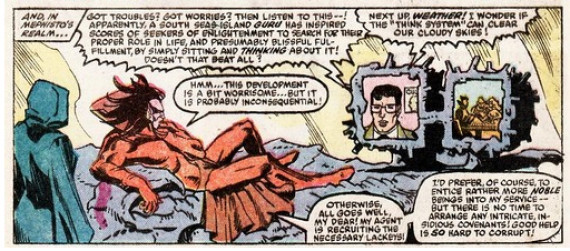
As early as 1976, Clark Kent -- aka Superman -- has been hiding within the Marvel universe as a reporter with a penchant for covering superheroes at a "great Metropolitan newspaper." This despite being the property of comic rival DC Comics, where Clark Kent is known for his journalism at the Metropolis news organization, The Daily Planet.


Marvel and DC have teamed up a few times and even inserted a super soldier character named Clark Kent into a Captain America plotline. But this Clark Kent as reporter was never made official in Marvel comics.


The Huffington Post spoke with the Marvel comic book writer who introduced the homage, Chris Claremont, to find out how the idea came to be. Additionally, John Byrne, one of the original artists of Marvel's Clark Kent, explained that it seems this all just started as a "goof."


So how did "Superman" end up in Marvel comics?
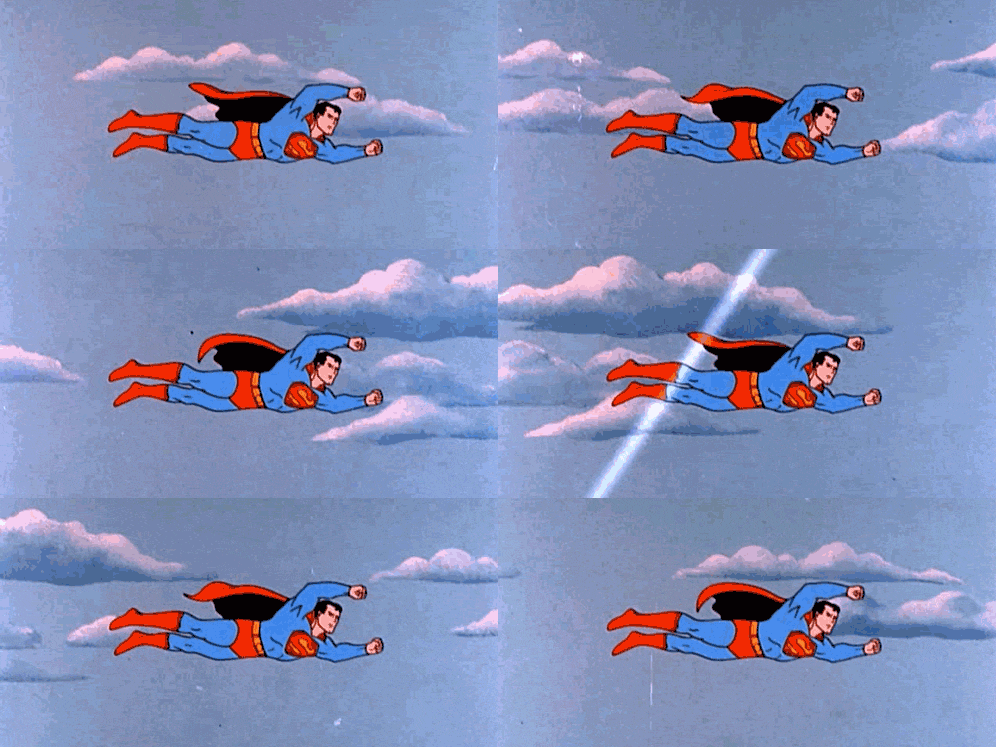


TK TK gifs


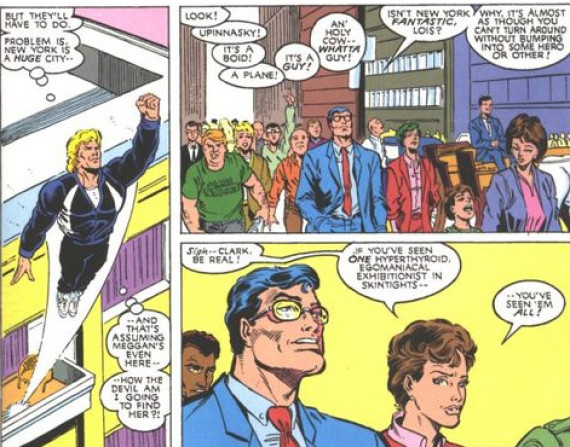
As fansite The Appendix to the Handbook of The Marvel Universe has extensively addressed, a Clark Kent character has appeared in some form or another over a dozen times within the Marvel universe, but it all starts with Claremont.


He explained that Kent's appearances were meant as a "sight gag" and that, along with artists Dave Cockrum and John Byrne, he simply thought it'd be funny. An official crossover between the two companies would have been "inappropriate," but just as they'd snuck-in other gags, the Clark Kent joke was simple enough to be acceptable and served a larger purpose of adding a sense of levity to tense dramatic action.


"We wanted to hold on to the fact we're not total stiffs, we like having fun with it," said Claremont.


Clark Kent's appearance is essentially a running joke or "spitball" shot at DC.


529229599


Byrne would go on to draw for the Superman franchise after inserting these little jokes. The homage was all just playful fun, or as Claremont explained, a sort of "spitball":


There were a body of rules, we couldn't crossover, we couldn't team up easily, officially. But we were all young punks in those days. No one says anything about throwing spitballs and occasionally they would turn into really fun little moments of storytelling. So, it all starts basically with, "Hey, wouldn't this be cool."


They didn't receive negative comments from DC, but, according to Claremont, he and his co-workers did make sure to never cross the line with the rival company's lawyers.


"In the case of a character like this, if you put too much focus on it, it's not a joke anymore and then you run the risk of ... goodness knows what kind of response mechanism with lawyers and what have you," said Claremont. "In both instances, now you're dealing with, what, 10 to 12 figure corporate structures."


The details were just discreet enough to avoid copyright infringement.


529229599
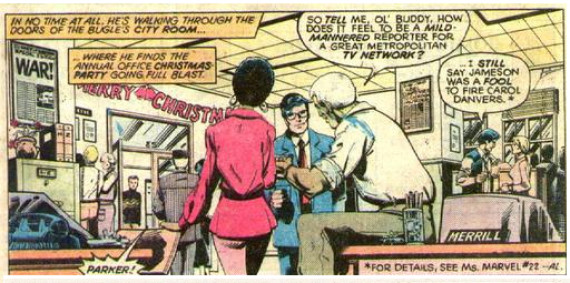
Both Clark Kent and Peter Parker appear in an image.


Neither of the original creators of Superman, Jerry Siegel and Joe Shuster, reached out about the homage to Claremont and only "over poker" with some guys from DC did it ever get mentioned.


Claremont explained the reasoning behind avoiding confrontation, noting that "civilians in the background" were "not quite as seriously trademarked or tracked as they might be today." DC was the "competition," but the corporations were smaller at the time and it was possible to get away with this kind of thing.


"We just did it as a -- for lack of a better term -- a giggle," said Claremont. "And the trick was to make the character visually recognizable to the intended viewer, but not actually label them properly so the legal department wouldn't get their noses bent out of shape."


Claremont said that if he had the reigns for a Superman comic, he "would not be amidst" to put a "young photographer from the Big Apple" into the scene. In those days there was just more freedom from these corporations' lawyers.


Is Clark Kent any good as a reporter in the Marvel universe?
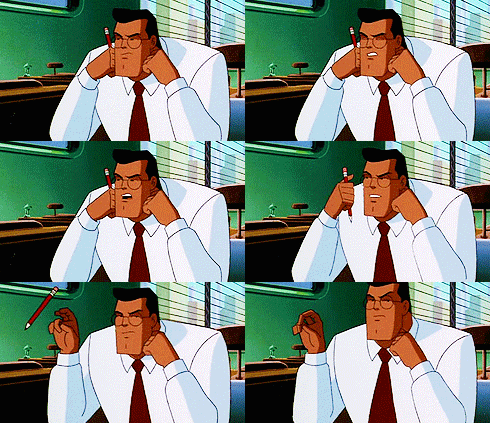


TK TK gifs


According to their in-depth analysis of Clark Kent's appearances, the aforementioned fansite about the Marvel universe concluded that Kent's powers and abilities include his work as "a capable newspaper reporter and television journalist."


A savvy reporter in the Marvel universe, Kent is often seen on television or liaising with high-level executives, such as the once editor-in-chief of The Daily Bugle, Joe Robertson.


Of course, going too deep into this Clark Kent's reporting abilities sort of kills the joke and the purpose of his inclusion. Claremont said, "He's a reporter for a great Metropolitan newspaper. If we ever described him, that was the way we described him. Which Metropolitan, we don't know. Which newspaper? Who knows."


The most recent known appearance of Clark Kent in the Marvel universe occurred in 2006, in an issue of "Fantastic Four" where Kent was seen at a crash site in Oklahoma.


As this has gone unknown so long by the general public, it seems the "Clark Kent disguise" must actually be better than anyone thought.


529229599


So, how did this go unnoticed for so long? Surely the Man of Steel shouldn't have been so hard to miss. Part of it was that this was just a joke amongst friends at Marvel, not trying to make this so overt that they got into legal trouble. As Claremont said, there was no way this secret character could have had a true narrative evolution or too much involvement in the script at least "just to avoid giant corporate fists coming down on our heads."


But the inclusion was certainly made for the fans, at least those who were the closest readers. Claremont explained his philosophy for his comic creation as a whole and how Clark Kent fits into his goals as a writer:


The idea was that we established characters and stories along a baseline that was exciting for readers of all sensibilities and ages, but if you were a little more hip, a little more aware, a little more on the ball, you could spot the various visual tropes that we were presenting and realize that perhaps we were suggesting something deeper.


Along with Claremont, artists Cockrum and Byrne were creating for both the casual and the super-fan in the early days of Marvel. If you knew how and where to look for something that came and went faster than a speeding bullet, you might just have caught a young reporter steel a scene every once in a while.


All still images Marvel.


Philip Pullman joins calls to scrap baseline tests for four and five-year-olds

The author adds his voice to that of educationalists, early years specialists and psychologists in calling for the ‘statistically invalid’ assessments be stopped


Children’s author Philip Pullman has joined leading educationalists, early years specialists and psychologists in calling for the testing of four and five-year-olds in their first weeks at primary schools to be scrapped.


The tests, known as baseline assessment, are due to be trialled in a number of schools from September and will be used to measure basic skills including children’s ability to count and recognise letters and numbers immediately when they start in reception class. They will be introduced nationally in 2016.


Related: Testing times for primary school pupils and Labour’s education policies | Letters


Continue reading...


The Secret Lives of Bilingual Books

Many Americans are familiar with well-known mainstream children's books such as the Dr. Seuss series, Goodnight Moon and Where the Wild Things Are. But what about Americans who come from another culture, speak another language or are bilingual? What children's books are there for them and their families?


This group, until recently, was especially missing from children's literature, often referred to as kidlit in the publishing world. These are the families whose parents' first language is Spanish and whose children are learning English in school. When you add in the fact that the majority of the 54 million Latinos in the U.S. are bilingual and yet very few children's books are bilingual you have a tremendous gap in books that can speak to this community and its culture, particularly the parents. That means they don't see themselves in the children's books distributed at their schools, stocked in their local libraries or sold in bookstores. The effect of this invisibility and absence in children's books is dramatic and negatively affects the self-esteem of these children.


Nationally, nearly 25 percent of all K-12 students are Latino and the percentage is only growing. In California, the most populous state in the country, Latinos comprise 53 percent of all students in K-12. Latino families like these--who live all across the country from the Southeast to the West Coast--are often bilingual with Spanish being the main home language for many.


And, guess what? Until now there have been very few children's books for this huge population of children who want to see themselves and their families in children's books.


Finally, one publisher is doing something about it. In the early 2000s, Katherine Del Monte founded Lectura Books and since then has been publishing bilingual books aimed at this large and increasingly expanding population. Her desire has been for parents and their kids to learn together how to love literature and to see themselves in the literature. These families are often marginalized in our society and their stories untold. To remedy this, she started Family Stories for Parent Involvement.


"We all want a literate society," says Del Monte. "The question is how do we get there? How do we do we reach millions of families who speak Spanish at home and help them learn English, learn how to read, and to build vocabulary. Reading is the essential building block for literacy and if we don't create bilingual books for these families, our society will lose the edge that literate and educated citizens bring to the country and its economy."


Based on her research and personal experience, Del Monte decided to tell their stories in a combination of both English and Spanish. To date, she has published 25 bilingual books including Letters Forever, a moving story about a young girl in San Antonio who exchanges letters with her grandfather who lives in Veracruz, Mexico. She dreams of seeing him again one day and when she becomes 18 she visits him in Veracruz. It's a story of love across the generations and the power of culture and music.


Another title published by Lectura Books is The Shark That Taught Me English. Written and illustrated for elementary students, it tells the story of a girl named Sophia who only speaks Spanish and how she learns English with the help of a shark image that her teacher uses in class. Once she begins to learn English, her self-confidence grows and by the end of the book she is teaching English to her father. Del Monte's books have won many awards including the Moonbeam Award, the Independent Publishers Award, the International Latino Book Award and been listed on the Texas State Reading List.


"My goal is to show the stories that are overlooked by mainstream publishers," explains Del Monte. "I want to publish bilingual books that connect families to their stories. Rather than allow this audience to be an afterthought at best, I want to showcase the brilliance and wisdom of their stories. No one in the U.S. is doing this today. You simply can't ignore a quarter of all the children in our schools. You can't ignore their parents simply because they don't speak English, are immigrants and work in low-paying jobs. True diversity in book publishing will only come by publishing in English and Spanish for the 37 million people in our country who speak Spanish."


This is not a new concern. In 2014, a hashtag #WeNeedDiverseBooks became a social media phenomenon when two authors of color, Ellen Oh and Lamar Giles, tired of the lack of diversity in kidlit, launched the hashtag and a movement was born that brought awareness to the stunning lack of diversity in American children's literature.


Flavorwire recently reported that, "In 2013, the Cooperative Children's Book Center in Wisconsin cataloged 3,200 children's books, constituting a majority of all children's books published that year. Of these, only 68 -- about two percent -- had black authors. A slightly larger number, 93, had black protagonists. The numbers are either comparable or worse for Asian Americans, Latinos, and American Indians, and show stagnant or regressive movement." They also noted that a 2014 Publisher's Weekly salary survey included questions about race and ethnicity and it found some dismal results: of the people working in publishing 89 percent are white and only three percent are Hispanic or Latino, 3 percent Asian and one percent African-American.


The bottom line: although the U.S. is growing more diverse every year, you would never know it from children's books or from the publishing industry itself. For that reason, Lectura Books plays a key and necessary role by publishing books that are culturally relevant to children and families who are often ignored. The long-term outcome will be to produce literate young people who go on to college and contribute to our society and its economic vitality. That's how you build a literate society.


Dear Indie Author: I'm Listening

Dear Indie Author,


I have a request that might rub you the wrong way, but I'm going to go for it. Would you please release an audiobook version of your latest novel?


Maybe you don't see an audience out there for your novel in audiobook form. I get it. The format is relatively new in comparison to the history of the written word. However, this is a growing market that shouldn't be ignored. AuthorEarnings.com stated in their January 2015 Author Earnings Report that:


Amazon.com alone visibly sells over 560 million ebooks and 420 million print books a year in the U.S. When you include the 70 million audiobooks Amazon.com sells annually (split 60/40 between digital downloads and CD format), you get roughly a billion books of all formats that are being sold by Amazon.com each year.


Perhaps you are under the impression that the only people listening to audiobooks are using them as ambient distraction. After all, who hasn't heard a coworker whose commute would be insufferable if not for an audiobook. While I have to admit that I've used audiobooks to save myself from a boring afternoon or two, they have also provided me immense joy over the years. I often close my eyes and listen to an audiobook while soaking in the bath after a long day. I'll pop in my earbuds and enjoy a few chapters while walking the dog during a brief window of Seattle sunshine. Listening to an audiobook can be as private and sacred as snuggling up in bed with my kindle.


That said, I know it must seem like a lot to ask to get an audiobook made. Almost every week I see mainstream authors releasing audio versions of their most popular novels featuring big name actors. It probably feels a little daunting. However, I want to tell you that the opportunities for indie authors in this domain have never been more abundant.


Marketplaces like Amazon's Audiobook Creation Exchange (ACX) allow authors to solicit auditions from a pool of voice actors to perform their books for either an hourly rate per finished hour or royalty share. You can essentially get your book produced with no up-front fee. As an author you are in full control of the casting process. You can listen to as many auditions as you like before you find the perfect person to voice your story. Once the project is complete, ACX handles the QA process and publishes your audiobook on Audible, Amazon, and even iTunes.


This is a pie in the sky idea, but you might even consider narrating your novel yourself. If you have a clear speaking voice and the time to dedicate to recording, I'd encourage you to go for it. As a listener, it feels extra special to hear an author narrate their own work.


Over the past few months I've tracked my listening habits. It turns out that I listen to approximately one audiobook in a given week, which is about as quickly as I read traditional print. It's a different sensory experience, but one I hope you won't forget about.


I hope to see your novel in audiobook form soon!


Devoted reader and listener,


Kate Fisher


Stephen King Has Our Favorite Response Yet To Indiana's 'Religious Freedom' Law

Stephen King might be a man of many words, but he kept his response to Indiana's new anti-gay law short and sweet.


Indiana Gov. Mike Pence's Religious Freedom Restoration Act, which was signed into law earlier this month, allows individuals and/or companies to cite religious freedom if sued for discrimination, thus, potentially legalizing discrimination against the LGBT community in the Hoosier State.


The declaration has resulted in a slew of backlash against Pence and the state from individuals and companies alike.


King, who split his time between Indiana and Connecticut as a child, took to Twitter to offer his opinion Monday, and he did not mince words.


King is not the only celebrity to speak out against the controversial law. Ashton Kutcher, George Takei and Miley Cyrus are just a few of the Hollywood figures to condemn the legislation.


Some Indiana GOP leaders are shocked the law is seen as anti-gay.


"I don't think anyone anticipated that the characterization of the bill would be, this denies to services to a specific class to Hoosiers," House Speaker Brian Bosma said during press conference Monday. "It does just the opposite. It includes all Hoosiers in the religious freedom standard. And it's a misperception that it denies services."


The governor has since called for an amendment to clarify the legislation would not discriminate against members of the LGBT community.


'Fun Home' Brings Lesbian Protagonist To Broadway For The First Time

Although recent years have seen a wealth of gay content on the New York stage, “Fun Home” breaks fresh ground as the first Broadway musical to feature a lesbian protagonist.


The advance buzz on the musical, which is currently in previews at Circle in the Square Theatre, has been quick to emphasize that fact. In reality, though, such a sound bite oversimplifies the show’s subversive qualities. Based on out artist Alison Bechdel’s graphic memoir of the same name, “Fun Home” is actually a compelling look at two sides of the queer experience, with a complex, multi-faceted message about family relationships.


Keeping the non-linear structure of Bechdel’s novel, “Fun Home” pairs Alison’s adolescence and subsequent coming out story with the darker journey of her closeted gay father, Bruce, who commits suicide after a string of secret affairs with younger men. Three actresses -- Sydney Lucas, Emily Skeggs and Beth Malone -- portray Alison as a child, a college student and a middle-aged woman, respectively. Meanwhile, the show’s second act is a dramatic tour de force for Tony Award-winning actor Michael Cerveris (“Assasins”), who plays Bruce.


From left: Skeggs, Malone and Lucas in “Fun Home.”


fun home musical


The musical, which is directed by Sam Gold, played to sold-out audiences and nabbed sterling reviews when it opened Off Broadway at New York’s Public Theater in 2013; it was also a finalist for the 2014 Pulitzer Prize for Drama.


So while “Fun Home” couldn’t be further from the top hats and jazz hands of the traditional, feel-good Broadway musical, the cast and creative team are confident their work will find a captive audience, given the universality of the show’s coming-of-age themes.


“With any show you do, there’s a concern about whether or not an audience will embrace it,” Lisa Kron, who penned the book and lyrics, told The Huffington Post in an interview. “If we start to have nervousness around that question, it’s not going to do anything for us.”


Still, composer Jeanine Tesori admitted that she and Kron experienced some creative tension over how to initially portray a relationship between college-age Alison and her girlfriend (Roberta Colindrez) while the show was in development.


“There was a point when I said to Lisa, ‘These two young women, they have to kiss. They're in love, they have to be sexual,’” Tesori recalled. “And she was like, ‘I can’t bear it if people laugh at them.’ I realized then all she had been through, and it was so heartbreaking to me. It wasn't about her holding back; it was about her protecting the character.”


Aesthetically, “Fun Home” has been given a sizable upgrade since moving uptown, too. In a move that Cerveris says “strips away even more artifice,” the show is now being presented in the round in an effort to make the audience feel like they, too, are part of the action being presented onstage.


The Broadway cast of “Fun Home”


fun home


“The audience that finds this show is going to be a thinking audience, because it lives in such an emotional place,” Malone said. “As a culture, we’ve arrived at a place that is just aching for this show to be.”


Regardless of how the show ends up faring with Broadway audiences, Kron says she will forever see “Fun Home” as the ultimate extension of the work she was doing as part of the women's collective WOW Cafe Theatre in the 1980s.


“People often say to me, ‘This is so much bigger than just a story about a lesbian.’ And I say, ‘What has changed is your sense that a lesbian is an actual human being who can be as much of a prismatic reflection of the human experience as any other type of character,’” she said. “There’s no explicit explanation, justification or apology in this show, and to me, that’s a very exciting thing to put on stage.”


“Fun Home” is currently in previews at New York’s Circle in the Square Theatre, with an opening night set for April 19. For more information, head here.


Poetry Coast to Coast: American Poets Paul Fericano and George Wallace

Paul Fericano and George Wallace


...the only people for me are the mad ones, the ones who are mad to live, mad to talk, mad to be saved, desirous of everything at the same time, the ones who never yawn or say a commonplace thing, but burn, burn, burn like fabulous yellow roman candles exploding like spiders across the stars.


-- Jack Kerouac, On The Road


In his newest collection, Hollywood Catechism, San-Francisco-born poet Paul Fericano sweeps up humor, irony and deep feeling in a winning trifecta. He takes the materials of popular culture -- from Elizabeth Taylor to The Three Stooges -- and makes of them something transcendent. Fericano rewrites Catholic liturgy, as in "The Director's Prayer", which begins, "Our Fellini / who Art in Carney, / Clooney be thy name," and ends not with "Amen" but, "Cut."


Yet, it is not all fun and games. For Fericano, founder of a support group for survivors of clergy abuse, male sexuality is inherently tied up with violence. A form of re-empowerment comes through satire. Master of the one-liner, Fericano sometimes delivers punch lines as titles, such as, "A Direct Correlation Between the War On Terror and the Proliferation Of Penis Enlargement Spam," and the chillingly prescient (a la Ferguson), "Thirteen Ways of Looking at a Black Man."


The poet also simultaneously admires and appropriates both Hollywood stars and famous poets, cutting everyone -- affectionately -- down to size. Obsessed since boyhood with the Three Stooges, poetic slapstick inhabits these poems in line after line that both hurts and makes us laugh. Indeed, Fericano may be said to be pulling off his own aesthetic -- "stoogery" -- delivered with same affection and dismay as the fool in King Lear's court.


These are poems that read like the messages in a bottle that might be written by the last sane man on Earth, when everyone else has gone mad.


In Poppin' Johnny, Long Islander George Wallace's poems explode on the page. Like the cartoon call-outs when Batman hits a bad guy in a punch-up scene, these poems are loaded with "pow," "bam," "biff." But, for all their muscular gestures, these poems also convey sensitivity and irony -- sometimes at once.


As much as Wallace has been called an inheritor of Kerouac, his heady and ecstatic proclamations can also be traced back to Whitman. Consider these lines from "Starlight! So Much Starlight":


[...] i saw starlight in


the coffins of the mad. i saw


starlight in the eyes of a dog.


i saw a man with a tin badge


he wore starlight on his chest.


handcuffs have it electric lights


have it window shades drawn


at night. [...]


These are poems obsessed with cars and dames, liquor and baseball. But beneath the brass-band bravado lie the horrors of "My First Dance" -- shaking a grown man's enormous sweaty hand, being pinned and kissed by a fat girl, drinking punch from a paper cup and sympathizing with the "four-legged madness of a dog / who was trying to do nothing more / complicated than just get away."


Yet even the most intimate moments are told in a vernacular slant, like when the speaker realizes in "How it Worked" that his lover is kissing him goodbye for the last time, and says:


i laid there like a pizza delivery guy with too / many pizzas to deliver who has fallen off his bicycle and / onto some wet pavement. i laid there like bambi on ice, / like flipper on a plate, and i looked back at her like roy / rogers trying to figure out what is wrong with his faithful / horse trigger.


These are poems as rough and vulnerable as manhood, as full of hope and heartbreak as the New World.


You could drive Route 66 from coast to coast to get a feel for the poetry of America. Or you could pick up copies of Fericano and Wallace, and read these poems out loud.


Portions of this article first appeared on robertpeake.com


April’s Reading group: Venice by Jan Morris

As spring revives our appetite for adventures abroad, we’ll be looking at a classic of travel writing


Now that spring is bringing back its gentle warmth, it’s time to go travelling. Specifically, to Venice: a place that often seems like a feat of imagination as much as a real bricks-and-mortar city. A place that is forever being made and remade in fiction by writers as impressive and various as Shakespeare, Byron, Hemingway, Thomas Mann, Evelyn Waugh, Daphne Du Maurier, Goethe, Stendhal, Dante. A place which, as Jeanette Winterson (who herself described the city memorably in The Passion) has said: “is quantum, a Schrödinger’s cat of a city, simultaneously dead and alive, true and false, solid and watery, firm and disappeared.”


No one captures this elusive quality better than Jan Morris. We’re going to look at her 1960 classic Venice, as well as exploring the broader literature of Venice and its history. I’m also delighted to say that Jan Morris has agreed to answer questions from you about this book and her long, brilliant career.


Continue reading...


How the arts can help offenders mend their ways

Allowing prison inmates to engage their imaginations through the arts can reap remarkable rewards, says Rupert Christiansen


via Books and Author Interviews http://ift.tt/1NDDF35