Pages

Tuesday, December 31, 2013

The Last First Day: My Favorite Read of 2013

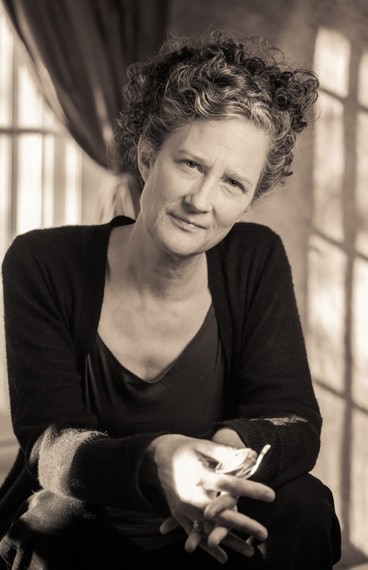
As The Last First Day (Random House) by author Carrie Brown was my favorite new book of 2013, I jumped at the chance to interview her when she passed through New Orleans. Our talk includes a minor amount of spoilers, but not enough to spoil your read. For background, her character Peter is an elderly headmaster of an East Coast boarding school for boys and Ruth has navigated her life as his wife while searching for her place in a changing world.


2014-01-01-Carrie.jpg


Carrie Brown


KDB: Death figures prominently in your novel, and we're so adept as a culture at not emotionally dealing with death on any real level. It strikes me that your main characters are dealing with death from the moment they meet.


CB: I think that's true, that they have a kind of an acquaintance with the mystery that is the beyond from the very beginning. Ruth and Peter, too, because his mother suffers from mental illness. And they are, as separate people, having to consider: What does it mean to have a day in front of me? What do I do with my life? In a way that maybe if you don't face those kinds of questions about mortality you don't actively think about that. But they really do. Peter makes very definite kinds of decisions about how he is going to live his life in the face of what is hard. Ruth struggles with that more with: "What is it I'm supposed to be doing? Am I supposed to be your helpmeet, that old fashioned word? But also Betty Friedan and Gloria Steinem are telling her that's not what you should be doing, that's not a good way to live your life. And her having to battle those twin impulses with: What do I do with this day that's in front of me, given that I'm acquainted with the end in some ways?


KDB: Ruth also has her literary aspirations because she's raised with the classics, but she sees people shooting up and over her and takes a lifetime to recognize that maybe what you're meant to do is what you've already been doing.


CB: She was untutored in many ways because she was so isolated. So she had to form her notion of what was valuable by herself.


KDB:
Having someone do as much work as Ruth did for Peter in his career in academia would be a paid position now, but not when she started out. The characters themselves are so lost but inspiring. What characters from which authors have inspired you in your recent reading?


CB: I'm in the middle of Elizabeth Graver's new novel The End of the Point, and that is a book that is filled with characters who are compelling. And it's a book of many generations and many voices. In terms of books that have been out there recently that absolutely has commanded my attention as a novel. The writer I discovered for myself along with a lot of other people was the short story writer Edith Pearlman who won many awards for her collected stories: Binocular Vision. It is wonderful. Story after story, character after character, those stories and characters will stay with me forever. I'm expecting to fall in love with Alice McDermott's new novel Someone, which I have bought because I've just loved her work over the years. It's so consistently lovely. And she writes at a pace that I really like. I like it as a reader and I like it as a writer, a slow, luminous contemplative pace.


KDB:
I very much enjoyed that in your novel. Not to divide it on gender lines, but you don't often get male writers covering a day covering small details in the day in the life of a woman preparing for an event that is meaningful in a couple's life.


CB:
No, You would never get a male writer beginning a book with a woman vacuuming.


KDB: But it's life. That's the other thing that's resonant. When she's looking for the vacuum. What did I put in front of the thing that I need? You often put everything in front of the thing that you need. It puts the reader right there in the story.


CB: I love something Virginia Wolf said about the writer's effort to convey to the reader the felt experience of a character without impediment. I love that: "Without impediment." For me as a reader, I love that sense that I have been dropped into the world and there's no impediment. There you are in the lighthouse. That is what I'm trying to produce for the reader, that sense that all impediments have floated away.


KDB: It's deftly done. With description of their aging, that process of letting go of tidiness, and then the husband who doesn't care that tidiness has been let go of.


CB:
I know, I kind of fell in love with their love affair. And it was really fun to write a love affair that does not go bad.


KDB: They're both far from perfect, too.


CB: Yes, they make many mistakes. And they have shortcomings which they recognize in each other. He recognizes her impatience and her insecurity. But they see each other very clearly and they still really love each other.


KDB: They know what they have.


CB: They know what they have, and they like what they have. They're lucky in some ways. As sad as the book as it is in some ways, to me it feels like a book about happiness.


KDB:
It's true, she gets robbed! The young gun's coming after her husband's job!


CB: All kinds of bad things happen to her.


KDB: And yet it's a love story. So here's my drill-down question like there's a magic writing time of day and direction to aim the desk. As far as the writing process, what are some of your steps to getting started?


CB: I don't watch any television at all.


KDB: I KNEW that was the secret.


CB: I just don't. Mostly I've felt like I didn't have time for years and years. But I do sometimes turn it on if I have piles and piles of laundry to fold. And for awhile there was a commercial on TV that shows some guy getting dressed, he comes downstairs, kisses his wife goodbye and picks up his briefcase and he does a swan dive off the edge of his front walk. That sense of taking that swan dive out of your immediate life into the dream that is the story you're writing is the thing that I'm always trying to find. Because my life is like most of us, busy. I have kids and dogs and ancient old cars that are breaking down, appliances that need to be repaired. All that stuff. So how do you actually take that swan dive? I do think it is a kind of mental exercise that you do. And you have to do it. If you don't do it, really you could be forever detained by the world around you.


KDB: The characters show the level to which you dove. The psychiatrist is such a gorgeously realized character. How were you inspired to write her?


CB: An interviewer once pointed out to me, you have so many physicians in your novels. It's like something someone points out and you realize: I DO wear a lot of black. My husband and I have a disabled child so a lot of our adult life, a lot of her life has been spent in the medical community in one way or another. Many of the people we've met have been highly intelligent empathetic people. And I think I'm always reaching out there for someone who can tell me what to do. Do THIS and it will be okay. Do THAT. You know this maybe from caring for elderly parents. When you get somebody who steps into your life and says these are the things you need to do, this is what's happening, here's how to understand the circumstance in front of you it's hugely comforting. So Dr. Wenning I think is that character who I'm always looking for really in my own life. The older person who's smarter than you are, but who also will be patient with you and sympathetic and will say: do this. So Dr. Wenning says to her: Get on the bus. Stop complaining. Shut up. Don't whine.


KDB: "Hang in there baby." I love the aphorisms.


CB: Yeah, she loves them. "Happiness is a warm puppy. Get a dog." But she's not wrong, really.


KDB: She isn't. We've become such a society of peers, sometimes social media can mean you're all reaching out to know you have this common experience but it's almost eliminated experts from daily life. For the love of GOD, give us some experts.


CB: Yes, a few experts would be really helpful. So she's the expert. I like that she only knows a couple of jokes. And I like that she loves Ruth, that she is a character who's capable of that kind of generosity. As Ruth loves Peter. I'm attracted to that, as we all are in other people. Someone who can really truly generously love somebody else.


And really see them.

In 2014, I'll only read books by writers of colour. Here's why | Sunili Govinnage


Before you throw accusations of 'reverse racism' at me, consider this: it is vital for us to hear more stories about our world told from non-western perspectives


2013 was the year I fell back in love with reading. As I read for a living, it had always been hard to look at more words once I got home, but last year I made the effort and it was worth it. In order to make sure I don't lose that passion, I have been keenly checking all those ubiquitous year-end "best books" lists to source new novels to read in 2014.


But my list has an entry requirement: I will only read novels written by authors who are not from western-European backgrounds. I will not be reading anything written by white authors.


Of course, I know accusations of reverse racism are pending, on the same vein that women-only book prizes and women-only reading lists have been declared sexist. And no doubt people will say I am limiting myself by purposely avoid books on the basis of an arbitrary factor. But it's the opposite: I see it as a way of opening myself up to new stories, rather than re-iterations of the same formulaic fables we've heard time and time again.


The first on my 2014 "to read" list is Nigerian author Chimamanda Adichie's latest, Americanah, which has been on several year-end best-of lists – including at The New York Times and The Guardian. It's possible that Adichie will reach a new level of mainstream recognition since part of her brilliant TEDx talk, We Should All Be Feminists, appeared as a sample on a track on BeyoncĂ©'s latest album.


I first came to know of Adichie a few months ago, when I watched a video of another TED talk she gave back in 2009. In it, Adichie explored how dominant cultural narratives create and sustain stereotypes – she calls it the "danger of the single story". Stereotypes, while not necessarily untrue, paint an incomplete picture of people and places – something she personally experienced.


In Adichie's words:


The consequence of the single story is this: It robs people of dignity. It makes our recognition of our equal humanity difficult. It emphasises how we are different rather than how we are similar.


So when she spoke about how she did not think "that people like me could exist in literature", it really struck a chord with me; as an immigrant kid who grew up speaking English and reading English-language books, I always felt alone and very, very different. As many times as I might re-read Pride and Prejudice (as I did) I always wondered why some truths are more universally acknowledged than others.


Adichie's discussion of the power dynamics in the way stories are told helped me make sense of my childhood uneasiness. It also made me look back and realise that it wasn't until I started reading books written by more diverse authors that I began to appreciate the importance of seeking out new perspectives in literature, popular culture and news.


In English-language media, everything amounts to stories of different places told though a western lens. But it is vital for us to hear more stories about our world told from other perspectives. Lilit Marcus, who recently wrote about why she only read books written by women in 2013, explained why:


One difference that my book list made is that it ever-so-delicately altered the way I looked at the world. It was slow at first, but opening myself up to a variety of female perspectives made me more aware of the female lives around me ... Feminism, as bell hooks pointed out, is for everyone. And when we become more aware of the small injustices and tiny everyday tragedies around us, we become better people. Reading women's voices helped me to hear them more loudly in my daily life. Our culture is getting better and better at encouraging women to speak, but it's not doing enough to listen to what they say when they do.


Just like opening up space for more stories from women, there needs to be a conscious effort to support multicultural voices and fight the assumptions surrounding what the mainstream market supposedly wants.


In addition to Americanah, my list so far includes Jhumpa Lahiri's The Lowland and Julie Otsuka's The Buddha in the Attic - both recently purchased by president Obama and, like Adichie's novel, about different migrant experiences in the US. I also want to read classics – James Baldwin's Another Country comes to mind – and critically acclaimed books – like Amitav Ghosh's The Glass Palace.


For new perspectives from closer to my Australian home, I will start with The Interrogation of Ashala Wolf, a dystopian young adult novel centred around an Indigenous girl by Ambelin Kwaymullina, and I'm chomping at the bit for Anita Heiss's Tiddas (out in March) and Su Dharmapala's Saree (out in May). I've also picked up a translation of Indonesian author Dewi Lestari's Supernova: The Knight, the Princess and the Falling Star.


As I build up my list for 2014, I would be grateful for recommendations of books written from different experiences and perspectives to that we always hear about. I will put the list of suggestions up on my blog and keep updating it over the coming weeks – do share yours below.


theguardian.com © 2013 Guardian News and Media Limited or its affiliated companies. All rights reserved. | Use of this content is subject to our Terms & Conditions | More Feeds


Print Ain't Dead In NYC (PHOTOS)

In a digitally-crazed city that never stops moving, one New York photographer reveals that everyone from pop stars to the homeless still gets lost in print.


My New Year's Resolution Isn't to Go to the Gym. It's to Be a Better Reader.

Of course, like most people, I do aspire to be healthier in the New Year. Maybe I really will stop buying vanilla caramel chocolates to keep at my desk, and I'll pull out that Jillian Michaels video and my yoga mat more than once a month. Maybe, even though I've failed in this resolution every year, 2014 will see me transform into a paragon of health and fitness.


My real resolution, however, involves a different kind of muscle -- one that's been atrophying in recent years. Yes, it's my brain, which needs to be strengthened with a healthy reading regimen. (Is the brain technically a muscle? No matter. You get the point.) Thinking over my weekly routine recently, I was horrified to notice how much my parents' early attempts to instill a lifelong love of reading in me had been eroded. How many days did I come home from work and immediately open Parks and Recreation on Netflix... then keep it playing until I fell asleep? How many Sundays were spent running unnecessary errands and watching football? I don't even like football. But staring at whatever game my boyfriend had chosen to watch on TV often seemed easier than cracking open a book.


Now, obviously there's nothing wrong with a little TV, and the duties of adulthood require time to be spent on cleaning, running errands, and, of course, focusing on work. But I'd started to use the mental demands of my job -- and the ability of my cat to cover every surface of my apartment in fur within minutes of the last vacuuming -- as excuses to stop challenging myself. By the time I felt too lazy to even watch hour-long dramas on TV ("They're just so much commitment," I heard myself telling friends, explaining why I still hadn't sampled Mad Men or Friday Night Lights), the situation had become dire.


As the weather turned cold, the extra time indoors gave me the perfect opportunity to work on my problem. I started in with a hefty book by Saul Bellow, who I'd never gotten around to reading in the past. After 100 pages, I realized I hadn't opened the book in days. Despite my good intentions, if it came down to Augie March or Netflix after a long, stressful day in the office, Netflix was going to win every time. Time to dial back the expectations -- I was easing back in, not starting a doctorate degree, right? I had more success with the Bridget Jones series, then The Hunger Games. So far, so good. Getting back into the habit of poring through the pages of a book rather than gazing at a screen was more daunting than I'd expected, but light, plot-driven tales coaxed me through.


As an English major and someone who has identified as "a reader" her whole life, the idea of being out of practice at reading was foreign. I simply thought I'd always read as easily as I ever had. But reading, like everything else, is a skill that gets rusty with underuse, and that's exactly what had begun to happen. So here's my first resolution: Every day, for the entire year, I'm going to sit down with a book. Some days it may only be a few pages. Hopefully some days it will be a whole book (okay, a very short book). Making it a daily habit is the most important thing to me -- turning off the computer, silencing the phone, and focusing on the words on the page in front of me.


At the moment, that resolution sounds challenging enough, but I'd like to add one more. Like many readers, I have a hard time looking outside the (predominantly white male) mainstream of fiction. I've read Franzen, Eugenides, and Lethem, and many of their works were fantastic -- but in my quest to read each year's critical darlings I missed out on so many less-heralded works that might have given me a greater diversity of perspectives. Knowing that the literary establishment struggles to fairly represent women and, to an even greater degree, people of color, this year I resolve to seek out wonderful authors who fall into those categories. And if I'm reading every day, hopefully I'll have time for the New York Review of Books picks AND those from less well-publicized writers.


In a society where around a quarter of adults haven't read a full book in the past year, maybe we should all determine to read more in the new year. With the ever-increasing distractions of technology, even the already-avowed book lovers among us may need to recommit to the world of literature, to reading a book instead of just switching on our favorite podcast before bed or cutting off our Internet browsing an hour early so we can read a novel instead of 13 more articles depicting the cutest pug/golden retriever/otter puppies ever. (There's time for both in the day, right?) There are many ways to resolve to be a better reader in 2014 -- you could vow to read Modern Library's Top 100 Novels (or, let's be realistic, the top 10); you could try to finish an epic like War and Peace or Infinite Jest every month; you could read only books written by women or only books in a genre you'd previously avoided (hello non-fiction, maybe I'll get to you next year). You could resolve to be a better writer by setting ambitious daily writing goals or setting a date for finishing the first draft of your nascent novel. Whatever it is, give it a shot -- your mind will thank you for the workout just as much as your body.


My Friendship With Gore Vidal and Norman Mailer: How They Buried the Hatchet

In My Friendship with Norman Mailer and Gore Vidal: How They Buried the Hatchet (Amazon Kindle), I explain how I convinced both men to sit down for a joint interview. At this time Gore was promoting his book, Hollywood, an examination of the influence of Hollywood in our politics culminating in the election of a former SAG president. "Reagan was our most ludicrous president," Gore says. Gore also talks about Grace Kelly and how she did not want to face the aging process which was part of her reason to quit acting and marry Prince Rainier.

At the time of our joint conversation, Norman just had finished directing Tough Guys Don't Dance. A disaster. Gore's foray into Hollywood was as writing screenplays such as Caligula and Myra Breckinridge. Also disasters. But these authors published words and tempers were memorable.


Mailer headbutted Vidal before an appearance on the Dick Cavett TV show after Vidal compared him to infamous killer Charles Manson. When Mailer said, "Vidal lacks the wound" (referring to his privileged upbringing), Vidal said: "Privileged? You mean more privileged than a fat boy from South Africa." (Mailer's father was born in Cape Town.) Vidal later claimed he was not the instigator of the antagonism, saying: "Mailer feuded with me. I knew Norman's syndrome. If I was on the cover of Time and he wasn't, my God he would be insulting me in the press. He couldn't stop. He lived for his little swig of PR."


Getting these literary lions together with their claws not protruding was not easy.


"Gore will not do it," Norman said.


Well, Gore was a gentleman throughout. So much so that when Norman signed the photo of the three of us, on the cover of this book, he wrote, "To that happy couple, Gore and Carole, Cheers, Norman." Norman Mailer was jealous of my attention to Gore Vidal. Funny, how that was.


Gore had dated Joanne Woodward who had married Paul Newman. These three remained friends for life, while Gore lived with his longtime companion, Howard Austen, in Ravello, Italy.


In the late seventies, I was introduced to Gore Vidal in Hollywood by Lester Persky who produced Shampoo. Lester was a good friend who invited me to this and that including the Oscars ('76) when his film, Shampoo, was nominated. Lester Persky not only introduced me to Gore Vidal, but also Truman Capote. The Polo Lounge of the Beverly Hills Hotel was a kind of literary salon which included stars of the not always gossamer silver screen.


Lester asked me to meet him in the Polo Lounge for drinks before the Oscars. Resplendent in a tuxedo, but struggling to hide his inebriation, Lester's face seemed to wither when Truman said, "Lester, you're too drunk to go to the Oscars." Truman was slight, charming and critical. As they say, "He was one to talk."


Lester and I did go to the Awards and still had a good time as Shampoo was honored with Best Supporting Actress for Lee Grant. Shortly after this, Lester asked me to meet him again in the Polo Lounge. This time he was seated with a handsome man and said, "Carole, I want you to meet Gore Vidal." I was stunned, as I was in awe of his writing and in awe of his good looks. His thick, sensuous lips were mesmerizing.


Gore's longtime companion, Howard Austen, also had been a friend through my circle of friends in Hollywood. Howard was outgoing, always laughing and loved playing pranks on people. He was not a snob, but protected Gore from hangers on. If one wanted to contact Gore, one contacted Howard. After I had interviewed Norman Mailer for the Fairchild publication M Magazine, who put Norman on its cover, I read in the New York Post that Gore Vidal was in town to promote his latest book, Hollywood, and was staying at the Plaza. So I dropped a copy of Mailer's handsome face on M's cover at the desk of the Plaza with a note to Howard asking for an interview with Gore.


That day Howard called. "Thought you were an actress," he said.


"No longer. I'm a journalist. Did you have time to read my interview with Norman?"


"Terrific, but if you want an interview with Gore, he is leaving for L.A. tomorrow to promote his latest novel Hollywood."


"Well, let me see what I can do." I said and within a few days I was on a plane to the holy land of celebrity. M had style and put me in the Beverly Hills Hotel which was where Gore was staying.


We did the interview which was challenging and fun. During our talk, Gore spoke to me as though Norman were by my side.


When I returned to Manhattan and showed the transcript to Norman, he was like a teenager quizzing me as though I'd just interviewed Justin Bieber. This gave me the idea to try to bring these feuding icons together in a conversation. When I mentioned the idea to Norman, his face showed excitement, but he said," Gore will never do it. Besides how would you make this happen?"

"I'll write him in Ravello."


And this is what I did. Months passed.


One afternoon Norman called. His voice was excited, but strained, "Gore is going to Paul Newman's birthday party tonight."


"Great! Ask him if he'll do the interview."


A few days later we were in a suite at the Plaza Hotel being photographed by my favorite paparazza, Bettina Cirone, and about to begin the interview which became a part of history. These snarling literary lions rolled over and purred. After I finished transcribing this interview that was done on spec, I sold it to Esquire. When it was published, I dropped a copy off at 60 Minutes and a friend, Don Hewitt, who was its executive producer. The next day this copy of the magazine was delivered to my doorman with Hewitt's handwritten note, "Nice Job!"


My Friendship with Norman Mailer and Gore Vidal: How They Buried the Hatchet
contains both the interview with Gore and the never before published raw transcript of the conversation between Gore and Norman. It is a rare literary journey that gives insight into these great writers and -- what could have remained a secret if not for this interview -- their admiration for each other.


10 Books to Provoke Conversation in the New Year

1. Think Like a Commoner: A Short Introduction to the Life of the Commons by David Bollier (New Society Publishers)


David Bollier is a leading writer and advocate for all those real-life commons -- what we own, from the public lands, public airwaves, online information and local civic assets. He calls the commons a "parallel economy and social order that.... affirms that another world is possible. And more: we can build it ourselves, now."


2. All the President's Bankers: The Hidden Alliances that Drive American Power by Nomi Prins (Nation Books)


All the President's Bankers is about the hidden alliances between big bankers and the government leaders they have controlled for the past 100 years. A gripping history that reflects the words of the famed Louis B. Brandeis (later to become Supreme Court Justice Brandeis) who wrote: "We must break the Money Trust or the Money Trust will break us." Prins was a former Goldman Sachs director. She knows this world.


3. How Can You Represent Those People? Edited by Abbe Smith and Monroe H. Freedman (Palgrave Macmillan)


How many times have criminal defense attorneys been asked this question when they represent unpopular, unsavory, or horrific accused defendants? Fifteen criminal defense lawyers write short but educational replies in both personal and professional terms. You'll learn a lot about our legal system.


4. The Truth in Small Doses: Why We're Losing the War on Cancer and How to Win It by Clifton Leaf (Simon & Schuster)


The Truth in Small Doses is a detailed, sober myth-busting report. Leaf concludes the "war on cancer" is a failure due to a dysfunctional "cancer culture" - "a groupthink that pushes tens of thousands of physicians and scientists toward the goal of finding the tiniest improvements in treatment rather than genuine breakthroughs; that fosters isolated and redundant problem-solving instead of cooperation; and rewards academic achievement and publication above all else." He shows why "the public's immense investment in research has been badly misspent."


5. The American Way of Poverty: How the Other Half Still Lives by Sasha Abramsky (Nation Books)


The American Way of Poverty is a worthy successor to Michael Harrington's The Other America which came out in 1962 and helped spark a war on poverty. Abramsky puts many faces of poverty into a broader context which sparks reader indignation that statistics alone can't provoke.


6. The Firm: The Story of McKinsey and Its Influence on American Business by Duff McDonald (Simon and Shuster)


The Firm portrays a finishing school for the plutocracy both as an early recruiter of future power brokers in business and government and as a "prestigious" provider of dated business management advice often of dubious value.


7. Censored 2014: Fearless Speech in Fateful Times by Mickey Huff and Andy Lee Roth with Project Censored (Seven Stories Press)


Censored 2014 is an annual open window to censorship of the big and routine kind. It is always a must read. This volume describes the top censored stories with media analysis of 2012-2013. What a shocking commentary on the so-called free press!


8. Lethal but Legal: Corporations, Consumption and Protecting Public Health by Nicholas Freudenberg (Oxford University Press)


Aggregation is a key strategy for justice movements. Author Freudenberg gives readers an absorbing aggregation of corporate crimes and abuses that destroy or damage every day the health, safety and economic well-being of the people. Then he aggregates the past civic/political victories over market fundamentalism and its corporate outlaws for framing future reform initiatives.


9. Front Porch Politics: The Forgotten Heyday of American Activism in the 1970s and 1980s by Michael Stewart Foley (Hill and Wang)


Decades are stereotyped and often exaggerated. Foley counters the conventional take that there was a sharp and sudden letdown in civic activism after the sixties. Maybe the impression was conveyed by the media's lessened coverage. Good antidote for those still demoralized by decennial mythologies.


10. The Capitalism Papers: Fatal Flaws of an Obsolete System by Jerry Mander (Counterpoint)


The Capitalism Papers is a fundamental critique of the intrinsic problems of the capitalist system that the author believes are inherent to its structure and unreformable. A former celebrated advertising executive, Mander goes deeper into the perverse incentives of corporate capitalism than almost anyone writing today. And man, can he write. Too bad top Wall Streeters won't debate him.


Years ago books mattered more in provoking change. It is up to readers today not to be overwhelmed by information overload, to be selective and make books matter again.


Take a Good Look Inside the Box You Want to Get Out Of

If you google the phrase "get out of the box" you will find more than 1.9 billion references to it. ("God," on the other hand, will only get you 368 million). Clearly, there is a growing interest, these days, about the so-called box phenomenon.


I am not surprised.


As someone who makes his living helping people get out of the box, I've heard this now iconic phrase uttered thousands of times in the past 25 years. No matter what industry, continent, or mood my clients are in, none of them aspire to be box-bound. Ask them, and they will tell you: The box confines. The box constrains. The box inhibits. Indeed, when most people hear that three-letter word they soon start thinking "coffin" or "jail" or, if they're from New York City, a painfully small, over-priced studio apartment.


While this is certainly one way of looking at the box, it's not the only way.


Some boxes, are actually good. Chocolates come in boxes. Perfume, too. And presents -- lots of presents -- especially during this gift-giving holiday season. When someone gives you a present, you do not cringe. You do not head for the hills. Quite the contrary. You get excited and start tearing at the wrapping paper, curious to see what's inside.


Which is just one of the reasons why I found Prem Rawat's newly published book, No Ordinary Box such an interesting read.


Instead of dissing the box, he reframes it -- helping his readers see it (a metaphor for our limited sense of self) in an entirely new way -- not for what it separates us from, but for what it contains. Indeed, for Mr. Rawat, the box contains absolutely everything a person needs in this life -- if only we would slow down enough, tune in, and notice what was actually in it.


Known in some circles as an Ambassador of Peace, the author, again and again, makes a compelling case for looking more deeply into the box so many of us undervalue. "The box has a precious diamond in it," Rawat proclaims. "If you don't know about the diamond, you might treat it like any other box. But if you knew that a very precious diamond was inside this box, all of a sudden, it's no ordinary box."


Hmmm...


While most books I read, these days, move me only enough to skate across the smooth surface of the author's words, I found myself diving deeply into No Ordinary Box -- often discovering a single word, phrase, or paragraph so infused with nuance and meaning that, more than a few times, a trap door opened for me and I found myself experiencing what Prem Rawat tries so passionately to invoke in his readers: Presence. Clarity. Understanding. And the inspired moment of feeling completely alive.


Like a modern day magician, Prem Rawat has an extraordinary knack for shifting the way people experience what's right in front of them. Indeed, his book, skillfully excerpted from 20 of his recent talks around the world, is not unlike the classic magician's box -- the kind with hidden compartments. There are dimensions to it that are not immediately obvious upon first glance. The reader looks, but does not always see, the author doing his best -- via story, metaphor, humor, and a healthy dose of truth telling -- to reveal the unseen. Not the unseen as in obscure or metaphysical, but the hidden essence of what all people share in common.


Free preview here


Mitch Ditkoff is the Co-Founder and President of Idea Champions, an innovation consulting and training company headquartered in Woodstock, NY. His review of Prem Rawat's first book, The Greatest Truth of All, can be found here.


Sister Repurposes 'Bert And Ernie' Pop-Up Book For Gay Brother's Wedding Present

As the number of states offering marriage licenses to same-sex couples steadily increases, you really do need to begin asking yourself: just WHAT are you going to bring as gifts to all of those gay weddings?


One sister has gotten creative in her approach to gift giving and brilliantly repurposed an old Bert and Ernie pop-up book using pictures of her brother, his husband and their entire wedding party.


"My brother finally got the chance to marry the man of his dreams, my sister took every photo from the wedding and altered a Bert and Ernie pop-up book," YouTube user Breakdownclown notes in the video's description. "I made this video to show you that hard work from my siblings. Family is those who show up when you need them."


We absolutely love this -- check out the video above to see this sibling's love and dedication to her gay brother.


(h/t Instinct)


Writing In 2014

When I turn over the pages of a calendar for the new year, I feel as if I'm reading a book no one else has ever read.


Who knows where we will be next January? How many of us can remember what we did last year on this date?


Do you remember what you hoped for and feared back then?


Many of the big troubles are the same: we are still sending troops overseas, parts of the world are recovering from catastrophes initiated by nature and made worse by greed, those in pain from their bodies and their minds are kept from finding the help that could free them because they can't do the paperwork, raise the money, or bring themselves to admit the need. Parents lie awake wondering whether their children will be all right; children put pillows over their ears to stop the noise of arguments. Fearful and alone, some want on ly to know that they will not be abandoned; frantic and overwhelmed, others long to be genuinely on their own.


Having said that, it is the smaller worlds of our everyday lives (the ones filled with details and habits that keep -- most of the time -- the greater dread of the bigger world's darkness away) that nevertheless manage to siphon off our confidence and undermine our contentment. These domestic worries are as familiar as itch in the middle of your back: it's yours but you can't reach it; nobody is doing it to you but that doesn't mean you can make it stop ∂.


Anxieties are like itches -- and like memories. It's tough to make them go away. It's also tough to remember what they were like after you don't have them anymore.


If I remember what I worried about in the past it's because I cheat: I have journals.


January 1972 begins with resolutions:
Eat less greasy food, start homework earlier, get fingernails to grow, stay away from Tom because he will never love me the way I want him to and he'll only break my heart again if I let him, drink less soda.


During the intervening years I have managed (with the assistance of an excellent manicurist; I never underestimate professional help) to get my fingernails to grow.


That's about it.


It's not like my goals have significantly changed, either. I still drink too much soda (not to mention champagne), I still worry about overdoing my emotional attachments, and despite the fact that I almost always make my deadlines, I still beli eve I should start my assignments sooner in order to avoid the breathless, heart-thumping, photo-finish feeling when a piece of writing is due.


My January 1979 journal tells me I arrived in London via a one-way ticket, wondering what I'd be doing for the rest of my life (as if life itself were a short-answer quiz when instead it is an essay question with an undisclosed time limit). "It only hurts to have these feelings" I scribbled. "I crouch, wanting to avoid as long as possible the slap-in-the-face of my future."


By January of 1987 I was leaping rather than cringing towards what came next. I'd interviewed for the job at UConn: "What on earth can I expect from Storrs, Connecticut?" I asked, never having seen the place. But it's supposed to snow and I don't want to go to any other campus to give a talk." Such are the variables -- laziness, weather, fear of travel -- shaping our destinies.


And sometimes things get better: the future has been known to offer handshakes rather than slaps, after all.


Of course, we often don't realize that until later.


Try this: write, honestly, what you're thinking about today. Then look at it next year. Maybe you'll see what you'll hold onto, and maybe see what you'll need to let go. Could be that you thank yourself -- not for the reminder of what bothered you, but for the relief of realizing it's no longer there.


You know when you're lucky enough to find somebody willing to scratch that place in the middle of your back? Amazing, right? When done properly (not so it gets worse and you pretend you're thankful even though your misery has been increased) you can be relieved of the constant nagging awareness of yourself. You breathe deeply, smile, and relax. Then you forget.


Lessons? Relief from ourselves can be a blessing; perspective is an amazing gift; and books -- especially the unread ones beginning with each new year-- almost always start with inscriptions.


Inscribe away. Happy 2014.


'Detroit 1968' Captures City 45 Years Ago, Full Of People

What can change in 45 years? In Detroit, quite a bit.


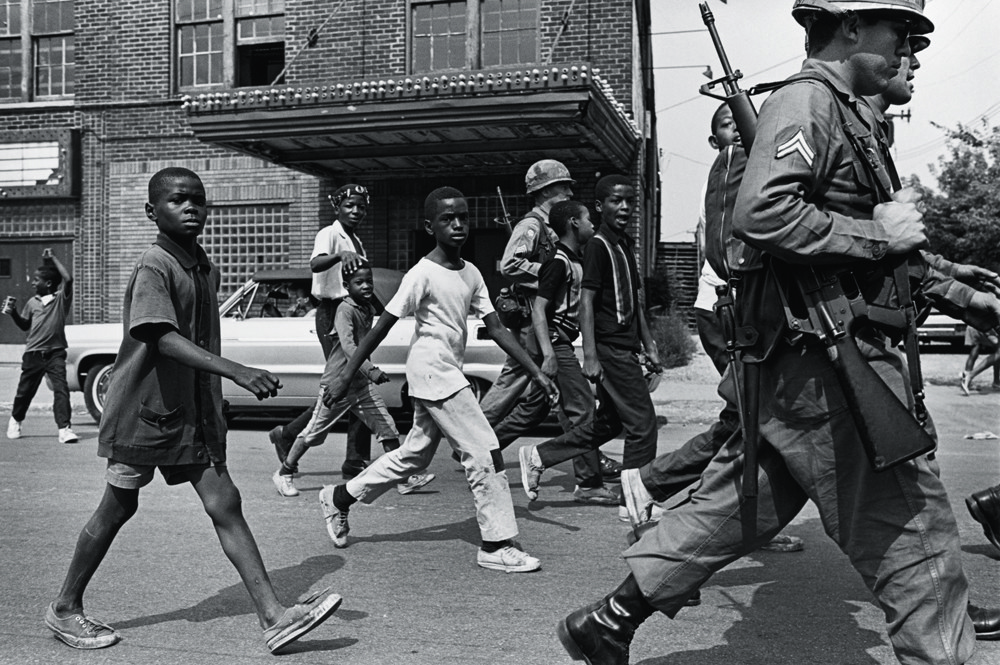
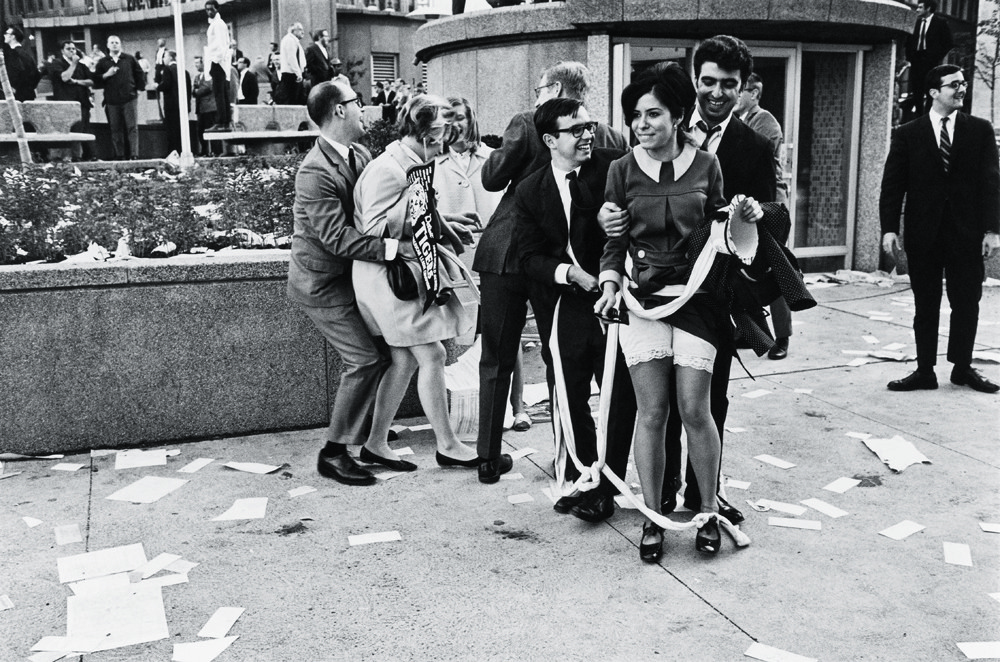
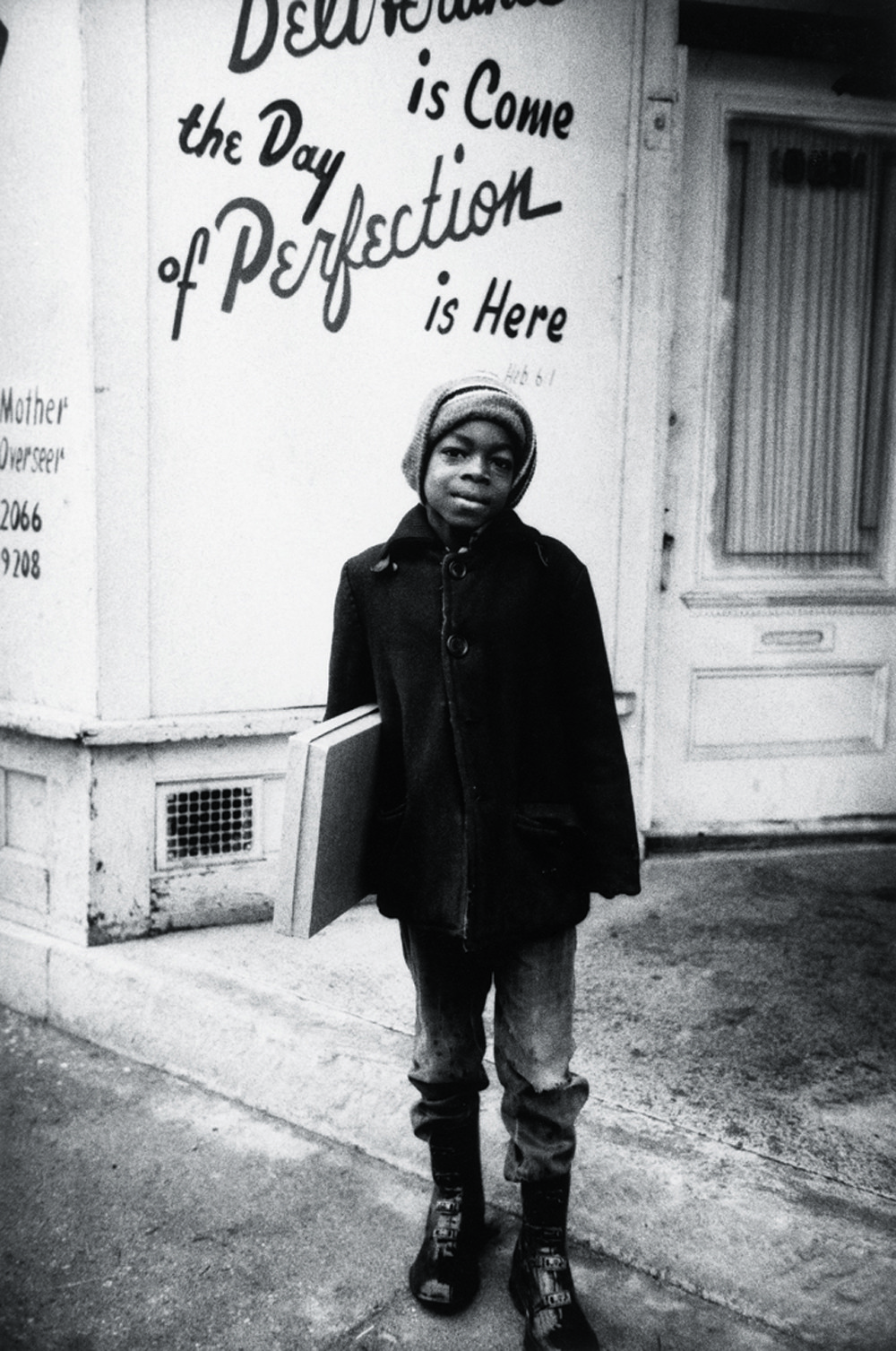
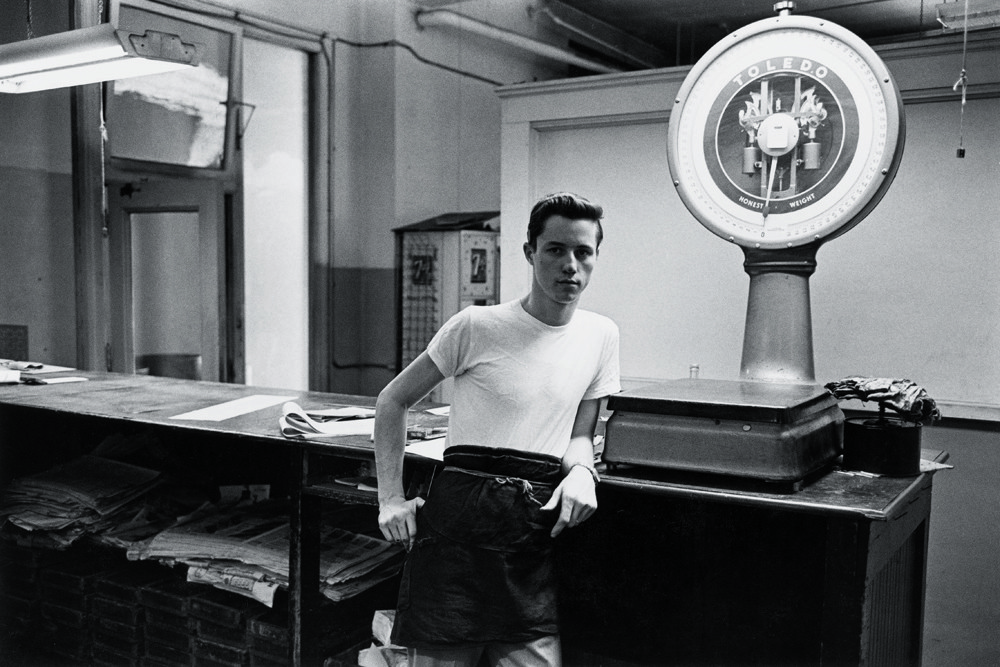
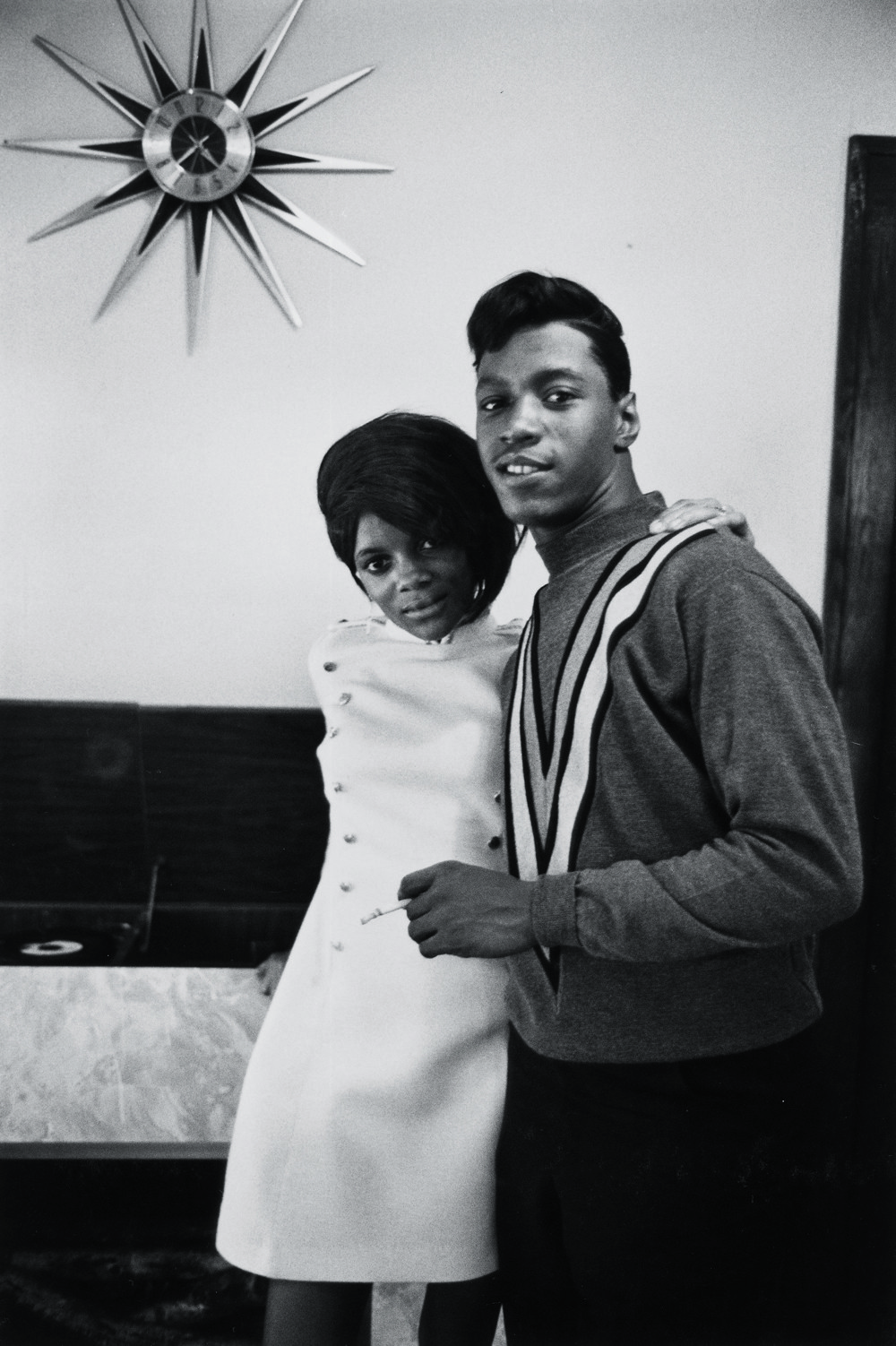
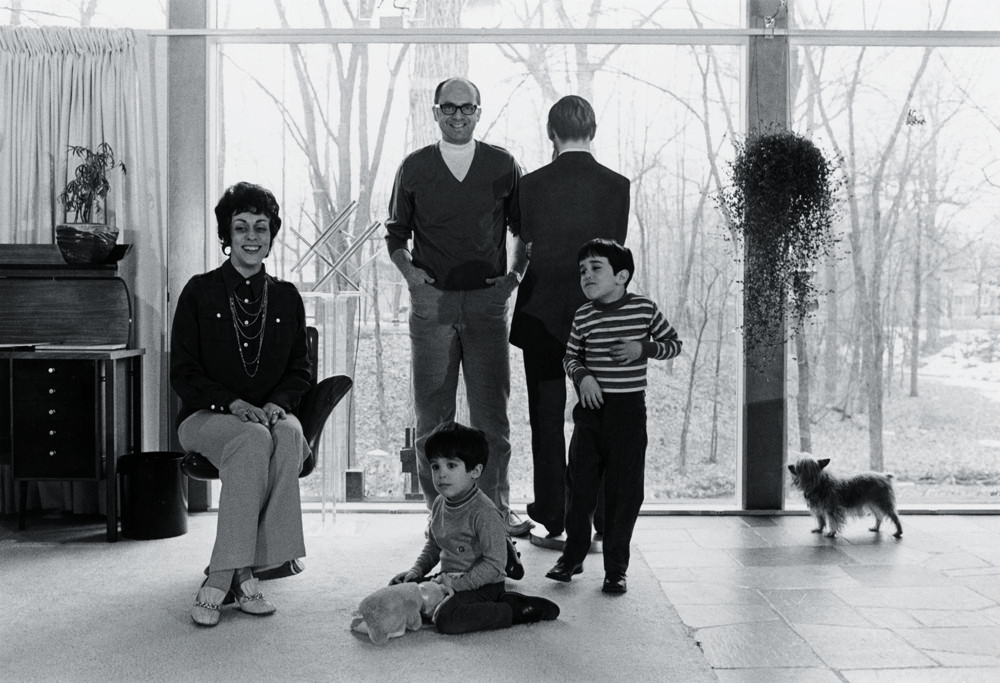
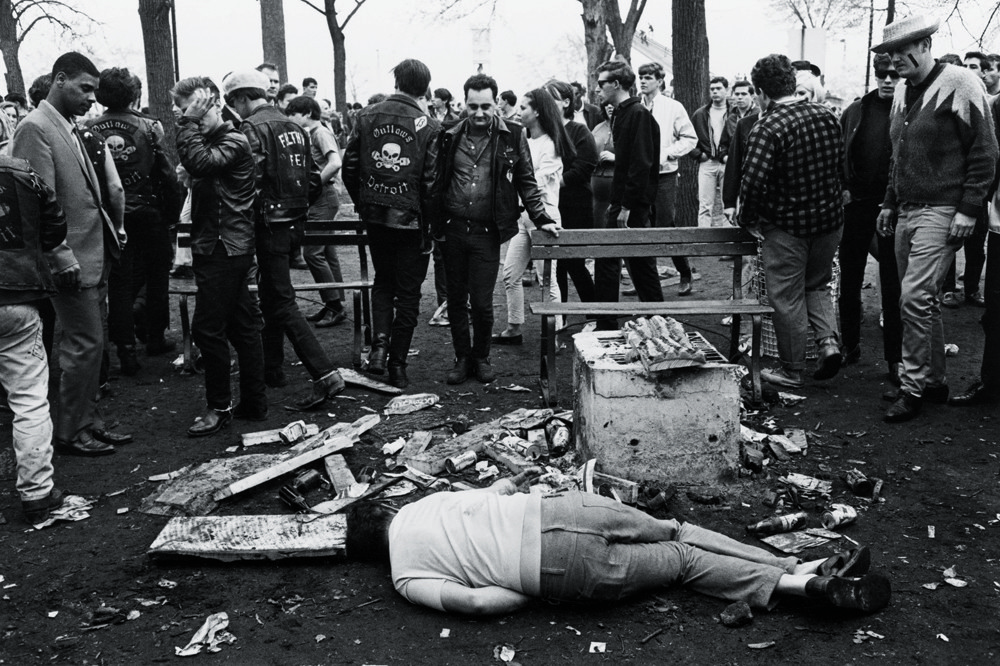
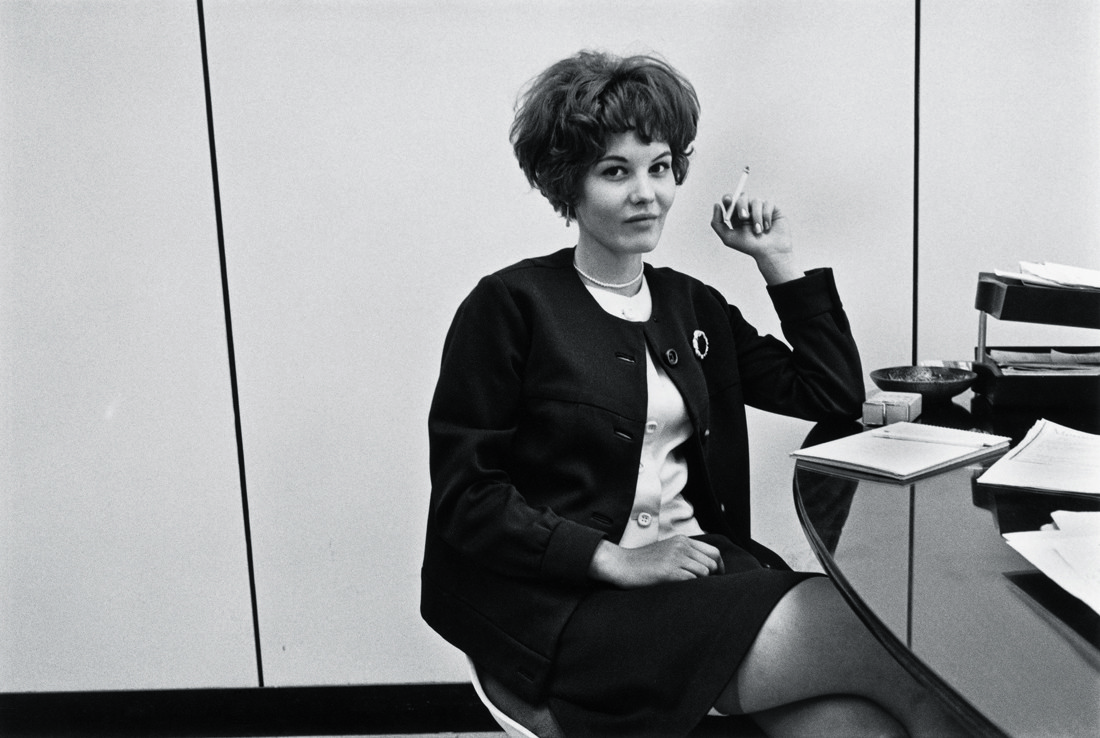
Photographer Enrico Natali's Detroit 1968 collection, released this year by Foggy Notion Books, shows a city at a pivotal moment after the 1967 riot.


enrico


The city would go through enormous changes over the next decades, including massive population decline: Detroit lost more than half its residents over those 45 years. But Natali, a photographer born in Utica, New York in 1933, captured a lively city, full of families, workers, partiers and suburban high school students who'd venture downtown to shop.


The series was released in 1972 under the name New American People. At the time, former Curator of Photography at the Art Institute of Chicago Hugh Edwards wrote: “These scenes and incidents might have occurred anywhere in the United States in this time when regional characteristics are disappearing. ... This is a view of a situation and condition, not a localization.”


enrico natali


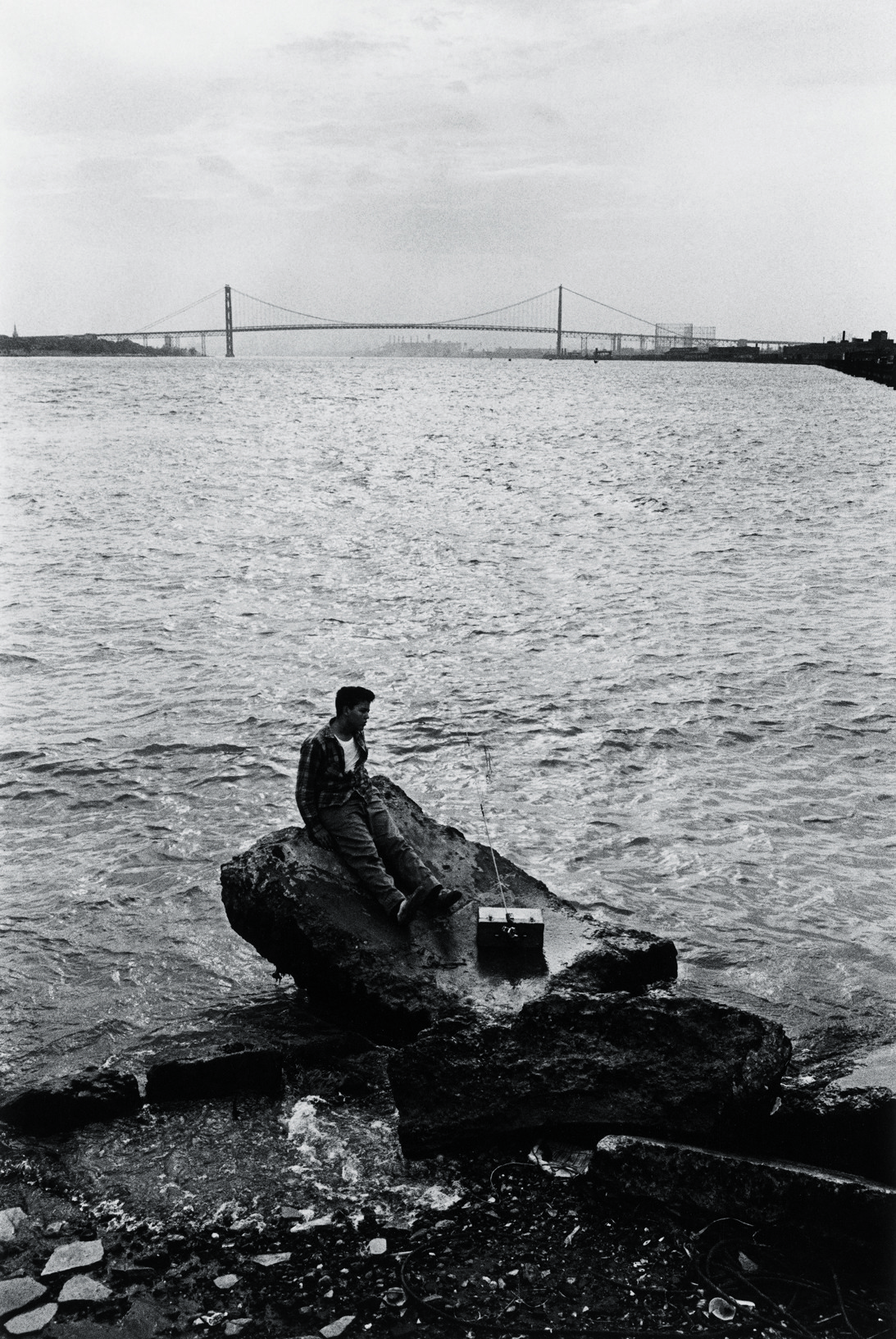
Those who have never been to the Motor City might see a past that resonates with their own histories. But for residents, the images -- Detroit Tigers celebrations, factory workers, auto show gatherings, a lonely figure in front of the Ambassador Bridge, everyone smoking -- will seem deeply Detroit, not least the unspoken racial divide. In his introduction, author Mark Binelli says Natali depicts "two distinct Detroits," one white, one black.


"It's impossible not to scrutinize these captured moments for hints of what's to come," Binelli continues. "Natali has a particular talent for tracing a frame around scenes that, however incidental, suddenly become fraught with mystery."


And while it's difficult to look at Natali's photographs without an eye towards the present day, his portraits of kids playing outside, families gathered in their home, people on their way to work, are also timeless. Scroll down to see sa small glimpse of Enrico Natali's Detroit.


enrico natali


natali


enrico natali


enrico natali


enrico natali


enrico natali


enrico natali


All photos by Enrico Natali, courtesy Foggy Notion Books and Distributed Art Publishers, Inc.


Lena Dunham Shouldn't Have To Tweet Because She Is A Serious Writer, Okay?

Lena Dunham really hates tweeting. She told Salon that she is "under great duress" and a lot of that is due to the fact that everyone keeps making her tweet things:


I feel like I miss a little bit the old – I mean it was kind of pre my career – but the idea that you made something, you put out a book or you put out a movie, and then you went into hibernation. You had your experience of preparing to put the next thing into the world. And that doesn't exist, because people are blogging and tweeting.


Do you guys not understand what it is like to be a serious writer? Have you not watched the hit TV show "Girls"? It's a real struggle, especially when you're also a 20-something.


As Defamer points out, Dunham currently has over 7,000 tweets as well as nearly 1,000 Instagram photos, which also surely puts her "under great duress."


Like this time, when someone forced her to announce that "Monday is for lovers" by taking a selfie.


Or this time, when she had to "keep it casual" with her new hat, because she had no other choice.


Or this time, when she was struggling to find a nice chair while reminding you that she wrote, directed and starred in a film called "Tiny Furniture" ... under threat of death.


Or this time, when she was compelled to document an ironic "good hair day" OR ELSE.


Or this time, when she was coerced into communicating her concerns about post-Nathan's flatulence.


Or this time, when she just couldn't handle social media anymore, but also really needed you to know she had finished her dinner.


Goal Doing Instead of Goal Setting

My husband is not a writer, but his writing tips work. In fact, Bryan's advice about writing will help you with any goal. He's that good. (I'm not simply biased.)


What makes his advice helpful? He believes more in goal doing than goal setting, and it was his get-it-done attitude that turned me into a writer.


I dreamed about a writing career when I was a kid, but at some point in college after a detour with potential majors in Art History and Italian, I settled on a double major in Political Science and Spanish with my eyes on law school. I abandoned the idea of writing because it seemed as preposterous as claiming I wanted to be a movie star. The reasons I abandoned the pursuit of law school is a convoluted story involving seven months of my junior year living in Chile and researching an extremely boring thesis on the political parties there. By the end of college, I was neither a writer nor a lawyer-to-be. I was adrift.


Fast-forward a few years: I got married young, earned an M.ED in Education, and taught ninth grade English for some time. In February of 2007, exactly three months after giving birth to our second child, I cried to Bryan often about how I'd never become a writer. I would have loved it, I'd say dramatically. I'd sob about all the wrong turns I'd taken and about all the wasted time.


"So start writing," Bryan said.


What's that now?


"Start writing. Just start. What are you waiting for?"


Naturally, I had numerous reasons why he was wrong. For example, Mr. Expert, what was I supposed to write about?


"It doesn't matter," he said. "You'll figure it out as you go."


Every time since then when I get stuck or feel unsure about the next step in my slowly growing (but growing!) writing career, he uses some version of the original advice. "Start writing" became "Keep writing." "You'll figure it out" became "You always figure it out."


Almost seven years later (and the addition of two more babies), I've seen several of my short stories published in literary journals and essays published in places that make me proud. This past year, I was especially thrilled to accept a position as a contributing writer to Brain, Child Magazine's website, a publication I have long admired as a reader.


Every time I have doubts or when I freeze at the site of the blank screen and blinking cursor, I rely on Bryan's original advice. I think it applies to almost any goal, which is why I wanted to share it with you today.


START. JUST START. WHAT ARE YOU WAITING FOR?


A version of this essay first appeared on Nina Badzin's blog.


Luke Grimes Exits 'True Blood,' His Character To Be Recast

It looks like some new blood is headed to "True Blood."


TV Line reports that Luke Grimes, who played vampire James on the sixth season of the HBO series will not be returning for the final season ... even though his character is.


This past October, Grimes (who was seen previously on ABC's "Brothers & Sisters") was cast as Christian Grey's brother in the highly anticipated film adaptation of "Fifty Shades of Grey." When production of "Fifty Shades" was pushed back to Dec. 2, it was unclear whether Grimes would be able to film both -- even though "True Blood" showrunner Brian Buckner hinted at big plans for Grimes' character.


An HBO spokesperson said that "the role of James is being recast due to the creative direction of the character," but TV Line learned from someone close to Grimes that the actor "started reading the scripts for Season 7," and "was disappointed to learn that they were going in a completely different direction with James," and asked to be let out of his contract.


The final season of "True Blood" will premiere Summer 2014 on HBO and "Fifty Shades of Grey" will hit theaters Feb. 13, 2015.


Lawyer who uncovered JK Rowling's Robert Galbraith alter ego fined £1,000


Christopher Gossage told his wife's best friend that obscure writer of The Cuckoo's Calling was in fact Harry Potter author


The lawyer who catapulted a promising but obscure new crime writer into the bestseller lists by revealing the author's true identity as JK Rowling, has been fined £1,000 for breach of confidentiality.


The Solicitors Regulation Authority has also issued a written rebuke to Christopher Gossage, of Russells solicitors, who confided to his wife's best friend that Robert Galbraith, author of The Cuckoo's Calling, was really one of the most famous and wealthy authors in the world.


Gossage said he believed he was speaking "in confidence to someone he trusted implicitly", but the story subsequently appeared in the Sunday Times, to the dismay and rage of the author of the Harry Potter books.


The publisher of The Cuckoo's Calling, Little Brown – which also published Rowling's first adult novel, The Casual Vacancy – organised hasty reprints as the book, which up to that point had sold 1,500 copies in three months, shot 5,000 places to the top of the Amazon bestseller lists. In the week after the story broke it sold almost 18,000 copies.


Rowling was furious, however, and even more so when she discovered the source of the leak was her own solicitors.


"To say I am disappointed is an understatement," she said at the time. "A tiny number of people knew my pseudonym and it has not been pleasant to wonder for days how a woman whom I had never heard of prior to Sunday night could have found out something that many of my oldest friends did not know."


Writing on her alter ego's website, Rowling explained: "I was yearning to go back to the beginning of a writing career in this new genre, to work without hype or expectation and to receive totally unvarnished feedback. It was a fantastic experience and I only wish it could have gone on a little longer."


Inevitably there were suspicions that the whole affair was a marketing stunt, but in fact the book had been sent as the work of the unknown Galbraith to several publishers. Orion was one of the few honest enough to admit they were kicking themselves, having seen the manuscript and turned it down.


Rowling's solicitors made it clear that the revelation came from them, not the author.


"We, Russells solicitors, apologise unreservedly for the disclosure caused by one of our partners, Chris Gossage, in revealing to his wife's best friend, Judith Callegari, during a private conversation, that the true identity of Robert Galbraith was in fact JK Rowling.


"Whilst accepting his own culpability, the disclosure was made in confidence to someone he trusted implicitly. On becoming aware of the circumstances, we immediately notified JK Rowling's agent. We can confirm that this leak was not part of any marketing plan and that neither JK Rowling, her agent nor publishers were in any way involved."


Rowling sued both Gossage and Callegari and received a fulsome apology and her costs, and the firm paid undisclosed substantial damages to the Soldiers Charity. Rowling also donated royalties from the book to the charity, explaining that they had helped with the research for the book's ex-army hero, Cormoran Strike.


A new Cormoran Strike thriller is due out in 2014, again listed as authored by the considerably less obscure and even more promising Robert Galbraith.


theguardian.com © 2013 Guardian News and Media Limited or its affiliated companies. All rights reserved. | Use of this content is subject to our Terms & Conditions | More Feeds


Lawyer who uncovered JK Rowling's Robert Galbraith alter ego fined £1,000


Christopher Gossage told his wife's best friend that obscure writer of The Cuckoo's Calling was in fact Harry Potter author


The lawyer who catapulted a promising but obscure new crime writer into the bestseller lists by revealing the author's true identity as JK Rowling, has been fined £1,000 for breach of confidentiality.


The Solicitors Regulation Authority has also issued a written rebuke to Christopher Gossage, of Russells solicitors, who confided to his wife's best friend that Robert Galbraith, author of The Cuckoo's Calling, was really one of the most famous and wealthy authors in the world.


Gossage said he believed he was speaking "in confidence to someone he trusted implicitly", but the story subsequently appeared in the Sunday Times, to the dismay and rage of the author of the Harry Potter books.


The publisher of The Cuckoo's Calling, Little Brown – which also published Rowling's first adult novel, The Casual Vacancy – organised hasty reprints as the book, which up to that point had sold 1,500 copies in three months, shot 5,000 places to the top of the Amazon bestseller lists. In the week after the story broke it sold almost 18,000 copies.


Rowling was furious, however, and even more so when she discovered the source of the leak was her own solicitors.


"To say I am disappointed is an understatement," she said at the time. "A tiny number of people knew my pseudonym and it has not been pleasant to wonder for days how a woman whom I had never heard of prior to Sunday night could have found out something that many of my oldest friends did not know."


Writing on her alter ego's website, Rowling explained: "I was yearning to go back to the beginning of a writing career in this new genre, to work without hype or expectation and to receive totally unvarnished feedback. It was a fantastic experience and I only wish it could have gone on a little longer."


Inevitably there were suspicions that the whole affair was a marketing stunt, but in fact the book had been sent as the work of the unknown Galbraith to several publishers. Orion was one of the few honest enough to admit they were kicking themselves, having seen the manuscript and turned it down.


Rowling's solicitors made it clear that the revelation came from them, not the author.


"We, Russells solicitors, apologise unreservedly for the disclosure caused by one of our partners, Chris Gossage, in revealing to his wife's best friend, Judith Callegari, during a private conversation, that the true identity of Robert Galbraith was in fact JK Rowling.


"Whilst accepting his own culpability, the disclosure was made in confidence to someone he trusted implicitly. On becoming aware of the circumstances, we immediately notified JK Rowling's agent. We can confirm that this leak was not part of any marketing plan and that neither JK Rowling, her agent nor publishers were in any way involved."


Rowling sued both Gossage and Callegari and received a fulsome apology and her costs, and the firm paid undisclosed substantial damages to the Soldiers Charity. Rowling also donated royalties from the book to the charity, explaining that they had helped with the research for the book's ex-army hero, Cormoran Strike.


A new Cormoran Strike thriller is due out in 2014, again listed as authored by the considerably less obscure and even more promising Robert Galbraith.


theguardian.com © 2013 Guardian News and Media Limited or its affiliated companies. All rights reserved. | Use of this content is subject to our Terms & Conditions | More Feeds


Gaiman v Franzen: Guardian books most popular stories of 2013


Neil Gaiman and Jonathan Franzen slug it out at the top of the books site - with competition from a classic or two


The tinsel's tatty, the recycling bin is stuffed to bursting, the last of the leftovers lurk ominously at the back of the fridge. As we stare down the barrel of another New Year's Eve it's time for that yearly rite, that inevitable reckoning with the number gods which publishing on the internet demands. Except it seems that it's not so inevitable after all – looks like I was busy last year – so, with apologies alongside our usual caveats, here's our traditional look back at the most popular stories of 2013 on the Books site.


And there at the top of the pile, glorious in its tenth anniversary year, is our list of the 100 greatest novels of all time. If you've been following my homage to the statistical deities all along then you'll have seen how at first I thought the continuing popularity of this venerable institution showed only the might of Google and the infirmity of literary culture. Over the years my attitude has shifted from avoidance to acceptance, but this year I've moved on to outright celebration. Ten years after Robert McCrum first picked those great novels he's gone back to the classics, this time assembling a "work-in-progress" list of the best English-language novels, "shaped by the narrative" of Anglo-American fiction. The discussion, the debate, the enthusiasm which Robert's essays have provoked is what this site is all about. And if Google and a big fat list of great books can bring people to the site who wouldn't normally stop by, then hurrah for that and welcome.


This spirit of positivity continues with Neil Gaiman, whose impassioned defence of novels, libraries and reading comes in at number two. It's great to see his curly locks riding high up the list in what has sometimes seemed like the year of the Gaiman. A novel , a comic , a children's book, a Doctor Who story and, ahem, a haunting story for theguardian.com/books – in 2013 Gaiman was everywhere from Edinburgh to Alamogordo. He even took over the Books site. But of all these contributions, he seems to have struck the loudest chord with a lecture delivered in London, where he argued that it is only through exercising our imagination that we become truly human. Authors have an obligation to "write true things", he argues, to "understand that truth is not in what happens but what it tells us about who we are". But all of us, "have an obligation to imagine".


It is easy to pretend that nobody can change anything, that we are in a world in which society is huge and the individual is less than nothing: an atom in a wall, a grain of rice in a rice field. But the truth is, individuals change their world over and over, individuals make the future, and they do it by imagining that things can be different.


If we're taking sides or declaring biases, as Gaiman suggests we should, then I'll have to line up beside him and the hundreds of thousands of the rest of you who enjoyed his piece in favour of books, in favour of reading, in favour of imagining another world.


Number three on the list slams the door on all this happy talk, with Steven Poole's roundup of management-speak at its worst. We're going to sunset any more of that going forward, otherwise these issues might see us challenge some of our most valued stakeholders.


Sex rears its ugly head at number four, as Zoe Williams anatomises female desire in her interview of the American author Daniel Bergner. His "headline, traffic-stopping message" is that far from being the prime movers of monogamy, women "may actually be more naturally promiscuous – more bored by habituation, more voracious, more predatory, more likely to objectify a mate". Bergner says he's astonished at the level of self-delusion required to maintain the myth of female fidelity. I'm more astonished by the skill with which Williams weaves together killer quotes, sexual politics and a brief portrait of her boyfriend – a masterful performance.


Next comes Jonathan Franzen, and his despairing lament for the modern world. With Jeff Bezos installed as one of the four horsemen of the apocalypse, Franzen looks forward to a world in which writers are "the kind of prospectless workers whom its contractors employ in its warehouses, labouring harder for less and less, with no job security, because the warehouses are situated in places where they're the only business hiring". A bleak prospect indeed.


Six and seven on the list are blasts from the past – or 2009 and 2011 at least – as we tip our hats to Reddit for bigging up reports of Hemingway's sideline as a failed KGB spy (thanks golergka), and a collection of 500 new fairytales discovered in a Regensburg archive (thanks arriver).


Eight on the list is this year's first no-show: our rights to Daniel Dennett's seven rules for thinking have, um, expired. I'll point you to Steven Rose's sceptical review, or my own more positive one and move on.


Nine and ten return us to the matter of lists, with a "definitive" list of the 1000 novels everyone must read and the top 100 books of all time, narrowly edging out Gregor Samsa's appearance as a Google doodle and Stephen King's dismissal of the Twilight series as "tweenager porn". Can't wait to hear what he makes of Austenland ...


The top 10 most read:

1. the 100 greatest novels of all time

2. Neil Gaiman in defence of libraries and reading

3. Steven Poole's roundup of management-speak at its worst

4. Zoe Williams interviews What Do Women Want author Daniel Bergner

5. Jonathan Franzen on all that's wrong with the modern world

6. Hemingway was a failed KGB spy

7. 500 new fairytales discovered

8. Daniel Dennett's seven rules for thinking

9. 1000 novels everyone must read

10. Kafka's Metamorphosis becomes a Google doodle


theguardian.com © 2013 Guardian News and Media Limited or its affiliated companies. All rights reserved. | Use of this content is subject to our Terms & Conditions | More Feeds


The Best of the Best Books Lists

We've come to the end of another year, and another round of year-end, best-of-the-books lists, favorites, awards and holiday shopping guides for the literarily inclined. (Has the volume been turned up this year, or is it just me?) Those of us involved with the creative work that inspired the list-makers anticipate and dread this time when we will either celebrate the happy news of being chosen, or reckon with the unfortunate sense of being left out. We cede our self-will to the judges, and as the lists appear, play he loves me, he loves me not -- the old daisy game, effeuiller le marguerite (It was originally a 19th century French game. Now it's possible to play with a digital daisy).


The list-makers, tastemakers and awards panels provide a service, of course -- they read first, let us know about things -- pro or con, thumbs up or down, cut a path through a thicket of print -- but they also parade around the notion of a meritocracy; a kind of literary noblesse oblige with the culture's best interest in mind, when of course they are (like all choosers and choosing processes) partisan, subjective, contentious and biased in all kinds of ways, including all of the ways in which they do not want to appear (for example) racist, classist, elitist or gender-skewed. Then, there are dissenters who go to the trouble of presenting alternative lists reflecting their own point of view on what has been excluded. But, most authors do not find a place on any "list" at all, and are left to figure out why, and once the mourning-dust settles, or the indignant ashes, how to move on from there. All the buzz of acclaim collides with the very real needs of creating and desiring one's creation to strike some chord -- find a resonance in the world and with readers. (Paradoxically, being chosen or awarded can feel like being dressed up in the Emperor's New Clothes, and be just as paralyzing, oddly enough.)


But, does any of it matter?


Every year, as an editor, reader and writer, I wish for a cool hand, or the hand of history, to lay alongside these best-ofs and favorites. Or perhaps, in the literary world, our own Magritte -- a gentle, whimsical reminder that what we see is not necessarily what is.


As a young reader at my local library -- ignorant, blissfully, of anything having to do with the literary world -- I remember bypassing the shiny, gold-sealed prize-winners on display in the glass cases, or on the "new" shelves. I much preferred to browse the battered titles in the stacks, the ones whose covers were worn to threads, and run my fingers over the old, soft pages and feel how the type had been pressed. My initial test of whether any book was likely to be "good" was the smell and feel of it, and how the first paragraphs arranged themselves in my mind -- whether or not they evoked a sense of anticipation, excitement, curiosity, promise. Discovery was all -- like a treasure hunt. My trips to the library were perhaps the only times in my young life when I was allowed freedom of choice. And I had quickly come to understand that what had been passed from hand to hand and time-traveled into my arms (a heavy pile to be further winnowed to the maximum number that could be checked out) were the ones most likely to provide satisfaction. The "other" books -- those with the seals that sat on their covers like puddles of grease -- were (in my not-so-humble opinion) what the adults wanted us to read. Adults, as anyone with any sense could figure out, always had their own agenda. They were the keepers of the status quo, undermining the channels to the imaginative worlds, locking doors, slamming shut the windows and plastering big KEEP OUT signs over the most interesting points of entry. In my mind, those singled-out and chosen titles were sly deceivers, impostors -- naked Emperors strutting about.


Looking back with some adult insight, I also see the young person who was so often not-chosen - not singled out or specially noted -- in fact (it seemed to me) looked upon with skepticism by those in authority, left to puzzle out the Gallic shrug of my early encounters with the world. My adaptive strategy, I think, was more or less to teach myself to find what I liked; if I was not to be chosen, to choose for myself. And what I did find, those many hours in the dusty stacks, falling in love with the quiet and the scent of old bindings, sneaking into the adult section before it was legal, unearthing gold nuggets and pieces of eight -- all of that buried treasure -- gave me a whole and resilient self, one capable of venturing into the larger world, chosen or not.


Of course, today, I cheer on my writer and publishing colleagues who win awards or a place on the best-of lists and do my best to console those who did not and wish they had. But, in my heart of hearts, I believe it's all about something very different. Tolle, Lege -- the simple Augustinian direction to "take up and read" -- has stood me in good stead as reader, editor, writer. The best of the best, what is most needed and desired, often comes to us by an unseen hand.


The Legend of Gilgamesh by Geraldine McCaughrean - review


'It has a strong moral but it may take a while to understand it, which is good because it makes you think'


I loved The Legend of Gilgamesh - it was absolutely brilliant! Set in Mesopotamia (now Iraq) over four thousand years ago, it tells the story of Gilgamesh, a king who sets out on an epic adventure and finds wisdom.


Gilgamesh has strange dreams about a meteor and an axe falling to earth - these symbolise things that are going to happen in his future. He meets a wild man named Enkidu and they become great friends. Together they travel far and wide, fight the monster Huwawa and have troubles with the goddess of love Ishtar, who sets a heaven-bull upon them after Gilgamesh rejects her love.


When Enkidu dies, Gilgamesh is in despair and sets out to find eternal life. But is such a thing possible? Will he find happiness as a mortal? Can a mortal live forever?


I thought this story was amazing because it tells you about lots of strange creatures and legends which I hadn't known before. It also contains stories found in the bible (Noah's Ark, Adam and Eve and Jesus's suffering) and mixes them with some ancient Greek myths. It has a strong moral but it may take a while to understand it, which is good because it makes you think.


It is about finding wisdom and seeing the good in people. Gilgamesh realises it is better to have happiness and be kind and wise than to be angry and selfish and to fight wars all the time. Gilgamesh had to suffer and leave his home before he could appreciate just how good his life had been.


I would definitely recommend this book because it is a riveting, thought-provoking story with exciting illustrations. Not bad for a school syllabus book!


Want to tell the world about a book you've read? Join the site and send us your review!


theguardian.com © 2013 Guardian News and Media Limited or its affiliated companies. All rights reserved. | Use of this content is subject to our Terms & Conditions | More Feeds


The Day of the Locust, by Nathanael West, glamorously grotesque


For readers in austerity Britain there's comfort in a novel which follows the casualties of an earlier crash-and-burn


The Day of the Locust is Nathanael West's response to the Great Depression in early 20th century America. It may not sound particularly comforting, but for some reason it truly is.


As austerity ripples on in this century, the book's combination of escapism and relevance continues to draw me in. The language is so inventive, the characters so brilliantly (often absurdly) captured, and their behaviour so close to pantomime, that it renders the whole a garishly compelling and thought-provoking read. For me, there is comfort in lines that ring true, even as the characters falter and flail. (If horror films were truly as horrible as the scenes this book depicts then no-one would ever watch them. Yet I know I'm not alone in finding them squealingly cathartic.)


West chooses Hollywood, and its circus of grotesque clowns and cowboys, as the scenario for his 1939 novel. Throughout the post-crash years, while Hollywood's film industry bloated – films proved a popular way of escaping reality – the rest of the country wasted away. In line with the drudgery of the era, West gives little of the perfumed glamour of Depression-era Hollywood. His tinseltown is a place where dreams come to die. There's a strange sort of comfort in this no-nonsense approach to glitz.


Far from leading men and women, West's characters are the extras – the flotsam and jetsam, the "screwballs and screwboxes" – of the film industry. This carnival fools are as hollow and flimsy as the studio sets they frequent. It is perhaps this that makes their bawdy chaos seem hilarious when it might otherwise be unbearable.


Through the figure of Tod Hackett – a set painter who is of the gilded Californian world yet also, vitally, apart from it – we are given distance. Fresh from Yale School of Fine Arts, he vows to turn his brush to the people who "have come to California to die".


Unlike the other, papier mache, characters, we are assured that Tod "was really a very complicated young man with a whole set of personalities, one inside the other like a nest of Chinese boxes". Like many others – Homer Simpson, the deadweight Iowan who considers waking up from a nap a victory; Earle Shoop, the Stetson-wearing cowboy from Arizona; Miguel, his cock-fighting Mexican friend; Honest Abe Kusich, a bellicose "book-keeping dwarf" – Tod fancies himself in love with the book's wannabe leading lady, Faye; but he escapes.


Faye is an aspiring teenage actor whose only role so far has been as an extra in a "two-reel farce". Her movements are staged and her treatment of men so cruel that "if you threw yourself on her, it would be like throwing yourself from the parapet of a skyscraper." For all her affectation, troupes of men become mesmerised by her. Even Tod finds her infatuating:


"Being with her was like being backstage during an amateurish, ridiculous play. From in front, the stupid lines and grotesque situations would have made him squirm with annoyance, but because he saw the perspiring stage-hands and the wires that held up the tawdry summerhouse with its tangle of paper flowers, he accepted everything and was anxious for it to succeed."


The pale imitations offered by Faye and the other Hollywood masqueraders are rendered all the more waxen through proximity to the silver screens and powdered cheeks of a flourishing film industry. West's characters are too ridiculous and their trials too absurd to ever truly smart. Instead they engross.


Here is a society that has generated its own grotesqueness, through a twofold process of alienation: the pre-crash boom has made strangers of all who didn't share in the green glow of dollar bills, while the exclusive hierarchy of Hollywood makes outsiders of the rest.


As the novel reaches its frenzied end, Tod finds himself outside Kahn's Persian Palace Theatre (a sardonic nod to Coleridge's musings on creativity) hours before a film premiere. He correctly predicts: "At the sight of the heroes and heroines, the crowd would turn demonic".


Tod is tossed through the ocean of disgruntled bit players in a city designed for stars. Until, fished out, he is offered a lift home by a policeman. The siren screams. "For some reason this made him laugh and he began to imitate the siren as loud as he could." Fresh from the froth, he and we find catharsis in his escape.


In the small hours of Saturday morning, finding myself part of a London cityscape, with all of its raucous revelry, I find the thought that West had seen it all before, plus some, bizarrely comforting.


theguardian.com © 2013 Guardian News and Media Limited or its affiliated companies. All rights reserved. | Use of this content is subject to our Terms & Conditions | More Feeds