Pages

Saturday, November 30, 2013

Inaugural Poet Richard Blanco: 'I Finally Realized That My Story.. Is America'

MIAMI (AP) — The Miami neighborhood where inaugural poet Richard Blanco grew up, in many ways, resembles Cuba his family left behind. Down the street, a man sells avocados from a small table. His favorite bakery, a few blocks north, serves guava pastries and cafe con leche.


As a child and even as an adult, this was home. But it wasn't necessarily what he imagined as America. "There's always a little part of you as an immigrant that goes, 'Well, I'm not really American,'" Blanco said in an interview Monday with The Associated Press at his mother's home in Miami. "There's that other little boy on TV or some place I haven't been yet."


That feeling of displacement has been at the crux of his poetry.


When it came to writing the poem for the 2013 inauguration of Barack Obama, however, he was forced to re-examine his own relationship with America and what it meant to be American. Blanco was born 45 years ago in Spain to Cuban immigrants who moved to the United States when he was an infant.


The experience of writing the poem, Blanco said, was transformative.


"I finally realized that my story, my mother's stories, all those millions of stories of faces that were looking at me at the podium, that is America," said Blanco, the nation's first Latino and openly gay inaugural poet. "I finally realized that I'm not the other."


Blanco describes the writing the inaugural poem and two others — and the journey he has embarked on since — in a book, "For All of Us, One Today: An Inaugural Poet's Journey," recently published by Beacon Press.


Tasked with writing three poems in three weeks, Blanco said he struggled initially on the direction to take. He doesn't know how or why he was chosen though he knew the White House committee's choice was symbolic. He had published three critically acclaimed poetry books but was only modestly known at the time.


He read the work of other inaugural poets such as Maya Angelou and Robert Frost and of others, like Elizabeth Bishop and Pablo Neruda. But by the third day, anxiety began to set in. During mental breaks, he watched reruns of favorite shows like "Bewitched" and the "Brady Bunch," characters who encapsulated his fascination with yesteryear America.


Then came the shooting at Sandy Hook Elementary that left 26 people dead, 20 of them children.


"The tragedy opened a new emotional and creative pathway for me," writes Blanco, who now lives in Maine. "Writing the inaugural poem wasn't the same assignment anymore. I suddenly understood that as a Cuban-American, I hadn't explored my American side of the hyphen as much as my Cuban side."


He began asking questions, probing his relationship with America: Was this his country? What is the American dream? What was his place in America?


The result were three works: "What We Know of Country," which explores the childlike vision he grew up with of America and the more nuanced one he had come to embrace as an adult; "Mother Country," an autobiographical piece describing his mother's loss of country and discovery of a new one; and "One Today," which describes the mosaic of America, united under "one sky, our sky," and chosen by the White House to be read at the inauguration.


Standing at the podium on that frigid January morning, he said, he felt that the questions he'd been asking were finally resolved, surrounded by politicians, his mother, artists like James Taylor and Beyonce, and the faces of so many Americans who would write him afterward.


"It was such a powerful feeling to be embraced by America in a way I hadn't expected," Blanco said. "I think I finally feel, as I like to say, I discovered home was right here all the time. Home was in my backyard so to speak."


The year since has confirmed that conviction. Blanco travels the country, delivering speeches and readings everywhere from Boston after the marathon bombing, to the Fragrance Foundation Awards and the Northeast Association of Transportation Engineers (Blanco himself has worked throughout his adult life as an engineer while also writing poetry and teaching).


As Blanco says, "The weirder the venue, the more I like doing it."


"I'm excited to explore America and not so much from a first person anymore, but sort of a 'we' voice, which is what the inaugural poem was doing," he said.


Part of his motivation now, he said, is to rekindle the connection he saw Americans experience with poetry when he read at the inauguration.


"A lot of what I've heard back from the inauguration is these faces of surprise," Blanco said. "They're so entrenched still in America (with) this idea that a poem has to be indecipherable and rhyme and be beyond comprehension for it to be a poem. And people are like, is that a poem?"


But if Blanco spoke of Americans united under "one today" in his poem, it's also been one of the most divisive years in memory. Congress remains polarized. The government shut down for the first time in 17 years. And the public has increasingly lost its faith in its elected officials.


"I don't think what we've gone through in the last few years is a great example of being one today," Blanco said. "But sometimes all of that needs to come out of the wash to get there."


Coming back to Miami from his travels and home with his partner in Bethel, Maine, he said, is like returning to "the womb." Photographs of Blanco and his brother, some in the faded pastel hues of decades past, line the wall of a hallway in his mother's duplex.


"It isn't where you're born that matters, it's where you choose to die — that's your country," Blanco quotes his mother in one of the three poems he wrote.


That, Blanco says, is the conclusion he has reached, too.


___


Follow Christine Armario on Twitter: http://www.twitter.com/cearmario .


This week in books: Donal Ryan, NaNoWritMo and the Odyssey

In Guardian Australia's weekly books wrap: the Guardian First Book award, writing 50,000 words in a month, and what Homer can tell us about returning soldiers


Out of Time: The Pleasures and the Perils of Ageing, by Lynne Segal – review


Lynne Segal offers a powerful manifesto for dealing with the march of time


The mighty Simone de Beauvoir published Old Age in 1970, when she was in her early 60s. A troubled, anguished and angry testimony, it detailed her profound dismay at the sagging of the body; the loss of looks (her own and the admiring glances of others), the absence of desire and the unwilling and uncomfortable contemplation of mortality. Not for her the basic philosophy of Woody Allen: "Old age isn't so bad, when you consider the alternative."


In contrast, Lynne Segal's thoughtful analysis of ageing offers a far more combative, zestful approach. It asks: when suffering from "temporal vertigo", absorbing at once all the ages you have ever been, and dealing with the inevitable loss of loved ones, how do you accept the physical ravages and build on the experiences of the past, to live fully in the present? What does it mean to age well?


Segal, now in her 60s, is a socialist feminist and anniversary professor of psychology and gender studies at Birkbeck College, University of London. For the past 30 years, she has fearlessly taken on some of the loopier ideas of feminism and contributed significantly to a more optimistic agenda for sexual politics. In books such as Is the Future Female?, Slow Motion: Changing Masculinities, Changing Men and Straight Sex: The Politics of Desire, she challenged the kind of essentialism that believes that women are somehow "nicer" than men and that, as sections of the sisterhood argued, men are incapable of change.


Social conditioning is, obviously, particularly potent when it comes to the business of growing old. And here is Segal's first challenge. Whom does she define as old? "Late midlifers"? "Early elderly"? At what point does an individual cease being surprised at the wrinkled, chipmunked face in the mirror and begin the period of critical self-reflection that surely must be one of the perks of ageing? What's certain is that the number of years that have passed is no guide in itself; as the writer Penelope Lively says in Moon Tiger : "Chronology irritates me."


Madonna wearily refuses to age, while women are now bearing children in a decade when their mothers were ploughing through the menopause. Old age for Dante began at 45; for Hippocrates, it meant the 50s. Now, 10 million Britons are over 65 and soon centurions will be the norm.


How we age is influenced by society's attitudes and currently "youthism" reigns, but it is also dictated by events in the shape of disease, desertion and unexpected isolation and deprivation. A fifth of those over 65 live in poverty, the majority of them women.


Segal's book is worth buying alone for the vim with which she sees off the "dim-witted" arguments of coalition minister David Willetts and historian Francis Beckett, among others, who insist that the baby-boomers have stolen all the booty and forfeited their children's future. Neoliberals, not the baby-boomers, have done the damage, Segal argues, and there are better ways to share the diminished spoils – a tax on corporate wealth, for one.


To help construct her guide for a "good" old age, Segal calls on an army of poets, writers, academics and activists, perhaps too many, when it's her voice the reader may seek. Her recommendations include remaining politically active (she quotes the inestimable John Berger, in his 80s: "…one protests… in order to save the present moment, whatever the future holds"); valuing interdependency; treasuring connections with those who are younger; seeking out joy and ignoring all instructions to opt for invisibility and celibacy.


Until her 40s, Segal and her son lived in a collective in her large house in north London. Then she cohabited more conventionally with her male partner; she was 15 years older and he left her for a younger woman. Now, she has a female partner. Segal quotes from June Arnold's novel, Sister Gin, in which Su, in her 50s, falls for Mamie, a woman in her 80s. "My darling's face has been walked on by life," Su says, as a valediction, not a complaint.


Most of the cast that Segal rallies to explore her theme share an experience of beauty and/or fame, among them the poet Robert Frost ("No memory having starred/ Atones for later disregard/ or keeps the end from being hard"). The majority of those growing older will face other challenges. For millions, especially, perhaps, feminists, paid work, a career, has played a significant part in providing motivation and in forging an identity. Will retirement mean an erosion of a core sense of self? Or, looking back, is it possible to build on aspects of yourself you were never encouraged to value?


Segal quotes the remarkable Lou Andreas-Salomé, who, among her many achievements, became a psychoanalyst after the age of 60. "All my life I have done nothing but work," she said, near death. "And really, when you come to think of it… why?"


A question that could revolutionise ageing and that deserves an answer long before one runs out of time.


theguardian.com © 2013 Guardian News and Media Limited or its affiliated companies. All rights reserved. | Use of this content is subject to our Terms & Conditions | More Feeds


Ian Fleming hit a Nazi, but you should have seen the one that got away… | David Mitchell


Sky's sexed-up biopic of lan Fleming's life plays brilliantly to the internet age's curious blend of credulity and scepticism


A new TV drama is coming out about the life of the writer Ian Fleming. There's a lot of that sort of thing around at the moment. Because of our culture's lack of confidence in its ability to devise anything wholly new, a successful author's actual life becomes like a bonus work they wrote. No need to start readapting their stuff quite yet, because there's still the real life to do! And, brilliantly, it's marketable in the same way as all the recurring adaptations: as securely grounded in the old and good, rather than being new and now, contaminated by the unshakable rubbishness of contemporary us.


"Real-life stories" also play brilliantly to the internet age's curious blend of credulity and scepticism. We'll queue up for dramatised biographies of creative giants because we believe they might have had genuine experiences comparable to their most captivating inventions – we believe that fiction can be secretly real but we're less willing to credit the creative spark, the writer's genius. We prefer to think that they just typed up a load of amazing stuff that happened to them and pretended it was pretend.


I find my own scepticism running in the opposite direction. Why should I think that anyone about whom the main famous fact is that they devoted a lot of their time to sitting alone, writing down things that popped into their head, had much of note going on besides that? Concentrating on writing is hard enough when there's an episode of Come Dine With Me just starting, let alone amid an actually interesting and dramatic biographical context. Writers write because they're bored or poor or both – and I'm afraid I don't want to see programmes about that. I prefer Downton Abbey.


But in the case of Sky Atlantic's Fleming , I don't need to worry because lots of it is made up. The show's star, Dominic Cooper, reassured viewers not to expect an accurate depiction of the writer's largely deskbound war years because the programme had taken "huge liberties" with the facts of Fleming's life. "There's what he says he did, there's what his biographers say he did, and then there's what we say he did," Cooper explained last week.


In consequence the show sounds quite diverting, with Fleming at various times machine-gunning and punching the Germans. "Everything is based on something real, but we have sexed it up at times," said the director, Mat Whitecross. "He didn't have any fisticuffs with Nazis, but it felt like it would be better if he did." I see what he means. Then again, as an alternative, Whitecross could have dramatised the life story of one of the tens of thousands of men who actually did hit Nazi soldiers – and then just stick in a scene at the end pretending that this bloke also wrote the James Bond books. Because, you know, it feels like it would be better if he had.


The show will carry the disclaimer that the events portrayed are "fictitious or have been changed for dramatic effect". But then the whole selling point of the programme – of any show that's about a real person – is that viewers will be watching a dramatisation of things that actually happened. And, in this case, that it might be a bit like a Bond film. Further investigation into Fleming's life revealed those two draws to be mutually exclusive. So the producers felt the best solution was to make a load of exciting stuff up, like Ian Fleming did, and then have Ian Fleming do them, like Ian Fleming didn't.


Is this cheating? I think so. Truth doesn't need to be as entertaining as fiction. The fact that something is a true story mitigates the flaws in its narrative: any dull bits, unsympathetic protagonists or unsatisfying plot developments. It also completely excuses, and indeed makes a virtue of, implausibility. If a true story is unbelievable, that's amazing and proves it was worth telling. If people say the same about fiction, it means it's badly written. So Fleming is pulling a fast one, despite the disclaimer. It's trying to put viewers into a non-fiction-appreciating state of mind so they'll find the stories more enjoyable than if they knew they were made up.


I thought people wouldn't stand for this. When the disclaimer came up at the end, they'd be incensed and shout: "Hang on, that's not fair! I thought I'd enjoyed that and now it turns out I didn't!" But that was before I heard about the British passion for sea angling. It's huge, according to Sea Angling 2012, a comprehensive Defra survey of the sport. This is odd, because fish stocks have plummeted and it's become nigh impossible to catch anything at all. But people go fishing anyway.


As Mark Lloyd, chief executive of the Angling Trust, said of his attempts to hook a sea bass: "It's slightly embarrassing for me to admit that the last one I caught was three years ago, off Dorset, but there is a great joy in angling that goes beyond catching fish." That was when I realised that people will stand for anything, sometimes up to their waists in freezing brine.


The Defra report says that more than a million people went sea angling in Britain last year and that, after adding up what they spent on equipment, boats and accommodation, the activity contributed £2.1bn to the economy and supported 23,600 jobs. Meanwhile, says the Angling Trust, only 12,450 are employed as commercial fishermen. So fishing as a hobby – for, on average, 1.6 fish per day apparently (or just over 0.3 fish per year if you're Mark Lloyd) – is of more commercial value than professional fishing for food. That's got to be the definition of a service-oriented economy.


So if the very fish that give fishing its raison d'etre have themselves been fictionalised, with no apparent impact on the popularity of the hobby, then the huge liberties taken with Fleming's life will seem tiny by comparison. After all, nothing is larger than a fish that doesn't exist. And, at the end of a contented day of imagining mackerel, we can all go home and watch Ian Fleming beat up the Nazis.


theguardian.com © 2013 Guardian News and Media Limited or its affiliated companies. All rights reserved. | Use of this content is subject to our Terms & Conditions | More Feeds


Anita Shreve's 'Stella Bain' an improbable mystery woman

An amnesiac on a journey of self-discovery in WWI makes an oddly listless character in bestselling author Anita Shreve's new novel.


There's no doubt that public education has neglected World War I, with history teachers squeezing in a few lectures before launching into succeeding conflicts. Literature has been kinder to the Great War, offering many opportunities to remedy that oversight. Shell shock alone has been the subject of scores of novels (most notably Pat Barker's "Regeneration" trilogy) that remind us how WWI inextricably altered the trajectory — and the mythology — of the heroic soldier.


via Books - latimes.com http://feeds.latimes.com/~r/features/books/~3/wm0fDARppAA/la-ca-jc-anita-shreve-20131201,0,2560378.story

GONE Is Good

Book Review Jackie K Cooper

GONE by James Patterson and Michael Ledwidge


The stories concerning New York City Detective Michael Bennett are among the most popular James Patterson has written. Now with number six in the series, GONE, Patterson and his co-writer Michael Ledwidge have continued the enjoyment and the thrills. In fact this might be one of the most violent books in the series but it also has other chills and enjoyments included.


Manuel Perrine is one of the most wanted people in the United States. He has been captured once by Detective Bennett but due to no fault of Bennett's he managed to escape. At the time he vowed to take revenge on Bennett's family and this has caused Bennett's entire family - children, grandfather and nanny - to be taken to Susanville, a secluded part of California.


Bennett's wife is dead and he has ten adopted children to raise. He is helped by his grandfather Seamus and especially by the nanny he has found for them. Her name is Mary Catherine and she is perfect as the one to keep his brood in line. There have been some romantic sparks between Bennett and Mary Catherine in the past but things have cooled off some.


Now with Perrine on the loose and wreaking havoc in the States once again Bennett is desperate to keep his family safe. He is so concerned with their safety that he almost refuses when the FBI comes calling and asks for his help. The fact it is Perrine and this being one of the ways his family can finally regain their normal lives makes him decide to join the hunt.


In this story no one is safe. People are dispatched to their eternal reward with fervor. So don't get too attached to any of these characters because they may be gone before the book ends. Perrine is a monster and he displays his most vicious tendencies time after time.


Patterson once again keeps his chapters short and sweet and this brevity seems to propel the story forward. There is always time for just one more chapter so the reader flies along until the book is completed. It is over and you are ready for the next edition of the Michael Bennett saga`


GONE is published by Little Brown and Company. It contains 416 pages and sells for $28.00.


Jackie K Cooper


Nicholas Delbanco's 'Art of Youth' studies talent cut short

Studying the output of Stephen Crane, Dora Carrington and George Gershwin, Nicholas Delbanco looks for commonalities among creative types who create great works at young ages, then die early.


"There are no second acts in American life," F. Scott Fitzgerald observed acidly in his unfinished final novel, "The Love of the Last Tycoon." It is, of course, an ironic statement, for "The Last Tycoon" was nothing if not a second act sort of project — or would have been, had Fitzgerald lived.


via Books - latimes.com http://feeds.latimes.com/~r/features/books/~3/czH9Vs8--kc/la-ca-jc-nicholas-delbanco-20131201,0,5327971.story

1969: When Winning the Lottery Wasn't

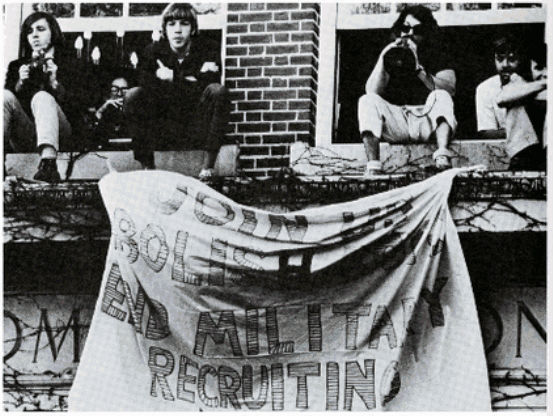
Americans tend to remember sacred dates: the day Kennedy got shoot or the Twin Towers fell. For many Boomers, there's another date with an upcoming anniversary: December 1, 1969, the night our government reinstated the draft lottery for the first time since WWII. Every able bodied male between 18 and 26 found out -- by dint of a lottery ball drawn from a fish bowl at Selective Service Headquarters -- if he was chosen to win the hearts and minds of the Vietnamese people. On campuses across the country, 195 was the defining number: under 195 meant trading textbooks for combat boots; over 195, in the words of John Belushi, meant TOGA!


In author Denis O'Neill's heartfelt and often poetic new memoir Whiplash: When the Vietnam War Rolled a Hand Grenade Into the Animal House, we glimpse what it felt like to come-of-age at Dartmouth between the free love of Woodstock and the raging anger of Kent State. At that time, my Uncle David was one of many college kids who realized his government was telling a big fat lie, and took to the streets to do something about it.


Like O'Neill, my uncle was a handsome, hard-drinking Ivy Leaguer who unexpectedly found himself stopping police batons with his face. As a young girl, I'd run my fingers over his thrice-broken nose, as he tried to explain how the draft lottery turned his fraternity life upside down. He promised I'd understand it better in college. However, when I landed on the apolitical campus of the University of Chicago, where fun goes to die, David's stories still didn't compute. Until I read Whiplash.


O'Neill recounts the time Dartmouth bestowed an honorary degree on Senator George McGovern. The day before graduation, the presidential hopeful told students at a peace symposium that America was "Less in danger of becoming a welfare nation, than in becoming a warfare nation." My generation has witnessed so many shock and awe campaigns since we freed all those sheep in Grenada, haven't we become the warring nation of McGovern's prophesy?


Nearly half of today's volunteer army is populated with young men from disadvantaged households. And in the army, the military's largest branch, it's nearly two-thirds. Maybe it's time we had another draft lottery to send the anxious low-number holders of all socio-economic rungs into the streets to protest. Maybe random conscription would save us from becoming a welfare nation, too.


Or maybe, we don't need a draft lottery anymore than we need a school lottery. Imagine if Obama co-opted JFK's "Ask not what your country can do for you, but what you can do for your country" shout-out, and instituted a national service program, like those found in the fine countries that top every 'best at...' list. An enlightened service program would include military enlistment, yes, but also options to teach, mentor, build, plant, and generally care for one another.


The Feds wouldn't need to stage elaborate WPA projects either. Currently, there's a not-for-profit organization for one out of every four Americans. What if we just leveraged the networks of care that already exist?


Without waiting for a presidential mandate, philanthropist Anthony Melikhov has hatched an ambitious global movement called unite4:good that aims to establish a new standard whereby acts of kindness and service becomes so idolized that everyone chooses to make them a part of their daily life. Take the consciousness-raising of the '60s, add social media and cutting-edge technologies like Youtopia's gamification and badging platform, add a dash of bitters from Wall Street, shake and pour. A powerful cocktail to pull us out of the ginormous mess you Boomers and bankers have left us in.


Imagine if service became inspired rather than required? JFK told us that the energy, the faith, the devotion which we brought to this endeavor would light our country and all who serve it -- and the glow from that fire would light the world. If my generation ignited that homecoming bonfire, double-down that we'll all don togas and laurel leaves, tap a keg, roast marshmallows, and generally feel like we've won the lottery. For real.


2013-11-30-whiplash.jpg


Parkhurst Takeover, Photo courtesy of Dartmouth College Library


The 10 best astronauts

From 1950s comics to a 2013 film, from Homer Simpson to James Bond's Holly Goodhead, space is a setting that sells


RSC's Wolf Hall adaptation is sellout hit before opening night


Stage adaptation of Hilary Mantel novel already a success as Mark Rylance prepares to play Thomas Cromwell in BBC version


Normally a stage show only sells out well in advance of opening night when a film star is in the cast or it contains songs by a well-known band. But this month the Royal Shakespeare Company has a very different beast on its hands: a story of political intrigue in the Tudor court. And the ruthless machinations of Henry VIII are proving just as big a draw as any Hollywood A-lister.


Such is the Hilary Mantel effect. Most tickets for the first theatrical adaptations of the author's multi-award-winning books, Wolf Hall and Bring Up the Bodies , disappeared soon after going on sale in the spring.


Those who hoped to see the twin productions at the Swan theatre in Stratford-on-Avon this month, but were unlucky, will have to try again when they transfer, as expected, to London in the new year.


Writer Mike Poulton had to translate Mantel's dark and suspenseful historical fiction into a drama less than a year after the publication of the second book. Poulton, who also adapted The Canterbury Tales and Gregory Doran's production of Morte d'Arthur for the RSC, is promising some "very telling dances" to communicate the tensions of Mantel's story.


"We had to create a viable play, rather than just try to put the novel on its feet – because you can't do that," he said. "In a novel you take your time, you enjoy the pictures it creates in your mind, you go back and reread." The big difficulty for Poulton was editing the hefty story down without losing the clarity and detail. The writer, who has worked closely with Mantel, has spoken of the pain of choosing what to leave out. "The one thing you can't do is condense it and say we'll do broad brushstrokes. You can't ask an actor to play broad brushstrokes."


The screenwriter Peter Straughan has faced the same knotty problem. Straughan, who recently adapted John le Carré's Tinker Tailor Soldier Spy for the cinema, has been commissioned by the BBC and America's Masterpiece Theatre to write a television series based on Wolf Hall. This production is to star Mark Rylance in the lead role of arch-strategist Thomas Cromwell. The BBC was so keen to secure Rylance that it has waited until he is free to take part, following his stint directing Vanessa Redgrave and James Earl Jones in Much Ado About Nothing at the Old Vic. Casting of the other key roles for the six-part series is now going ahead, according to the BBC. Peter Kosminsky is due to direct, with filming beginning in Bruges in the spring.


Last year Mantel became the first British author to win the Man Booker prize twice for consecutive books. Wolf Hall, which takes its name from the family home of the Seymours, begins in England in 1527 when Henry VIII, king for nearly two decades, is seeking a male heir. Cromwell, a commoner, arrives at court determined to fix the king's problem and enact his own reforms. In Mantel's second book, Anne Boleyn has become queen, but the king is falling in love with Jane Seymour and Cromwell must now operate within an even more complex power structure.


Taking on the central role at the RSC is Ben Miles, best known to British audiences for Coupling and Cold Feet and current part in Sky Living's Dracula. The king will be played by Nathaniel Parker, star of the BBC's Inspector Lynley Mysteries. He also recently played Gordon Brown in the hit West End production of The Audience , opposite Helen Mirren.


Paul Jesson will play Cardinal Wolsey and Lucy Briers, daughter of the late Richard Briers, will be making her RSC debut as Catherine of Aragon. Lydia Leonard is playing Anne Boleyn. The plays, in repertoire from this month at the Swan, are directed by Jeremy Herrin.


Miles's performance will inevitably be compared with Rylance's. A former artistic director of the Globe theatre, Rylance is viewed as Britain's leading stage star following acclaim for his Tony and Olivier award-winning performance as Johnny "Rooster" Byron in Jerusalem. He last worked with Kosminsky on screen in the Bafta-winning drama The Government Inspector.


There is no clue as to which Cromwell casting Mantel prefers, but she is backing both adaptations. "Peter Straughan's scripts are a miracle of elegant compression," she said when the BBC project was announced last year, while an edition of Poulton's plays will be published in January, accompanied by substantial notes by Mantel on each of the principal characters.Mantel turned down a film deal in favour of a television series, or perhaps two, because it would better serve the "complexity of the subject matter". Straughan and Poulton may both have more work ahead of them, as Mantel is writing the last in her Thomas Cromwell trilogy, The Mirror and the Light.


theguardian.com © 2013 Guardian News and Media Limited or its affiliated companies. All rights reserved. | Use of this content is subject to our Terms & Conditions | More Feeds


RSC's Wolf Hall adaptation is sellout hit before opening night


Stage adaptation of Hilary Mantel novel already a success as Mark Rylance prepares to play Thomas Cromwell in BBC version


Normally a stage show only sells out well in advance of opening night when a film star is in the cast or it contains songs by a well-known band. But this month the Royal Shakespeare Company has a very different beast on its hands: a story of political intrigue in the Tudor court. And the ruthless machinations of Henry VIII are proving just as big a draw as any Hollywood A-lister.


Such is the Hilary Mantel effect. Most tickets for the first theatrical adaptations of the author's multi-award-winning books, Wolf Hall and Bring Up the Bodies , disappeared soon after going on sale in the spring.


Those who hoped to see the twin productions at the Swan theatre in Stratford-on-Avon this month, but were unlucky, will have to try again when they transfer, as expected, to London in the new year.


Writer Mike Poulton had to translate Mantel's dark and suspenseful historical fiction into a drama less than a year after the publication of the second book. Poulton, who also adapted The Canterbury Tales and Gregory Doran's production of Morte d'Arthur for the RSC, is promising some "very telling dances" to communicate the tensions of Mantel's story.


"We had to create a viable play, rather than just try to put the novel on its feet – because you can't do that," he said. "In a novel you take your time, you enjoy the pictures it creates in your mind, you go back and reread." The big difficulty for Poulton was editing the hefty story down without losing the clarity and detail. The writer, who has worked closely with Mantel, has spoken of the pain of choosing what to leave out. "The one thing you can't do is condense it and say we'll do broad brushstrokes. You can't ask an actor to play broad brushstrokes."


The screenwriter Peter Straughan has faced the same knotty problem. Straughan, who recently adapted John le Carré's Tinker Tailor Soldier Spy for the cinema, has been commissioned by the BBC and America's Masterpiece Theatre to write a television series based on Wolf Hall. This production is to star Mark Rylance in the lead role of arch-strategist Thomas Cromwell. The BBC was so keen to secure Rylance that it has waited until he is free to take part, following his stint directing Vanessa Redgrave and James Earl Jones in Much Ado About Nothing at the Old Vic. Casting of the other key roles for the six-part series is now going ahead, according to the BBC. Peter Kosminsky is due to direct, with filming beginning in Bruges in the spring.


Last year Mantel became the first British author to win the Man Booker prize twice for consecutive books. Wolf Hall, which takes its name from the family home of the Seymours, begins in England in 1527 when Henry VIII, king for nearly two decades, is seeking a male heir. Cromwell, a commoner, arrives at court determined to fix the king's problem and enact his own reforms. In Mantel's second book, Anne Boleyn has become queen, but the king is falling in love with Jane Seymour and Cromwell must now operate within an even more complex power structure.


Taking on the central role at the RSC is Ben Miles, best known to British audiences for Coupling and Cold Feet and current part in Sky Living's Dracula. The king will be played by Nathaniel Parker, star of the BBC's Inspector Lynley Mysteries. He also recently played Gordon Brown in the hit West End production of The Audience , opposite Helen Mirren.


Paul Jesson will play Cardinal Wolsey and Lucy Briers, daughter of the late Richard Briers, will be making her RSC debut as Catherine of Aragon. Lydia Leonard is playing Anne Boleyn. The plays, in repertoire from this month at the Swan, are directed by Jeremy Herrin.


Miles's performance will inevitably be compared with Rylance's. A former artistic director of the Globe theatre, Rylance is viewed as Britain's leading stage star following acclaim for his Tony and Olivier award-winning performance as Johnny "Rooster" Byron in Jerusalem. He last worked with Kosminsky on screen in the Bafta-winning drama The Government Inspector.


There is no clue as to which Cromwell casting Mantel prefers, but she is backing both adaptations. "Peter Straughan's scripts are a miracle of elegant compression," she said when the BBC project was announced last year, while an edition of Poulton's plays will be published in January, accompanied by substantial notes by Mantel on each of the principal characters.Mantel turned down a film deal in favour of a television series, or perhaps two, because it would better serve the "complexity of the subject matter". Straughan and Poulton may both have more work ahead of them, as Mantel is writing the last in her Thomas Cromwell trilogy, The Mirror and the Light.


theguardian.com © 2013 Guardian News and Media Limited or its affiliated companies. All rights reserved. | Use of this content is subject to our Terms & Conditions | More Feeds


Ethan's Voice by Rachel Carter - review


'I found it genuinely original and different to many other books I have read'


Ethan won't speak… No, correction: he can't speak. For, you see, ever since he was little he hasn't spoken but he doesn't know why he stopped.


However, there's a new boat on the river, the "Moons End". What makes this boat special though is the girl on it… Polly. After all though, the big "if" is, will Ethan speak again?


When tumbling upon this little mystery, I didn't know quite what to think of it. Just a glimpse of the back of the book intrigued me. With an enchanting cover I couldn't resist, but I was still a little sceptical, after all you can't judge a book by its cover.


However the book was just as enticing as the cover itself. I found that the writer portrayed a beautiful image of what was going on. I found it genuinely original and different to many other books I have read.


However I wasn't really sure about the characters because they seemed rather simple and weren't particularly interesting. Also one of the disadvantages of Ethan not being able to speak is that you don't really get to know him.


Overall it was a truly original book and I think that is something authors should definitely think about more when writing a novel.


Want to tell the world about a book you've read? Join the site and send us your review!


theguardian.com © 2013 Guardian News and Media Limited or its affiliated companies. All rights reserved. | Use of this content is subject to our Terms & Conditions | More Feeds


Butterflies in November by Auour Ava Ólafsdóttir – review


An unnamed woman embarks on a wintry road trip with a deaf-mute child and a 'pet butterfly' in this evocative novel


Road trips in novels such as On the Road are a narrative device capturing the dream of leaving behind an old life and finding fresh adventures. It is the wintry roads of Iceland – and the metaphorical paths taken and not taken – that twist and turn throughout this evocative, humorous novel, beautifully translated from Icelandic by Brian FitzGibbon. The narrative begins in the dark days of November when "nothing is as it should be" in the unnamed narrator's life.


"On the threshold of a new life, it is important to shed all the things you don't need," she acknowledges, but although she sheds her husband and home, she gains unexpected companions – her friend's four-year-old, deaf-mute son, Tumi, who is cast into her care, and a "pet butterfly". A sudden change of fortune brings them a lottery win with which to embark on a road trip, but money can't buy love, and leaving behind a life raises questions that have long haunted her: "Who would miss me if I never resurface again?"


It's the humans here who behave like butterflies, landing briefly before fluttering off again, and so the engrossing narrative is patterned: following loosely the road-trip chronology, the narrator wings her way through memories of flirting and flitting between lovers. Should she stop living like a butterfly and put down roots? The beguiling imagery captures the fragile and fleeting beauty of those loved and lost, as well as the possibilities of self‑reinvention; of shedding skins, growing wings. The author also skilfully shows the beating of a butterfly's wing causing reverberating consequences, those seemingly tiny choices that have huge effects. The further the narrator travels from her life, the closer she comes to understanding its home truths.


theguardian.com © 2013 Guardian News and Media Limited or its affiliated companies. All rights reserved. | Use of this content is subject to our Terms & Conditions | More Feeds