Pages

Friday, May 31, 2013

Guardian Books podcast: John Lanchester on Capital

John Lanchester explains to the Gurdian Review book club why he decided to set a novel about the boom and bust of the early 21st century in a single London street - and introduces some of the characters who live there, from an African soccer prodigy to a floundering City trader.


Reading list:

Capital by John Lanchester (Faber)


via Books: Fiction | guardian.co.uk

Out-of-print Michael Crichton novels set to be republished as ebooks


Ten novels, written while the multimillion-selling author was a medical student, due back in print in July


A series of 10 novels penned by the late Michael Crichton while the Jurassic Park author was at Harvard Medical School will be brought back into print next month.


Crichton died in 2008, leaving behind him bestselling techno-thrillers including his story of dinosaurs genetically engineered back to life, Jurassic Park, and State of Fear, an environmental thriller featuring eco-terrorists which depicted climate change as a hoax. He sold more than 150m books worldwide, but began his writing career under a pseudonym while studying medicine at Harvard.


During his student years, Crichton supported himself by publishing eight thrillers as John Lange – he chose the name because Lange means "long" in German, and he was 2.1m tall. His rapid output – he could write 10,000 words a day – forced him to adopt another pseudonym. He chose Jeffery Hudson, after the famous 17th-century dwarf, for the award-winning medical thriller A Case of Need, and also went on to write Dealing with his brother Michael, under the name Michael Douglas.


All long out of print – except for A Case of Need – the novels are set to be released for the first time in years by Open Road, and for the first time as ebooks.


"These early Michael Crichton novels foreshadow the talent that made him one of the most successful novelists of his time," said Jane Friedman, co-founder of Open Road, announcing the deal. "I was fortunate enough to work with him for more than 30 years. What a joy it is to bring the young Michael Crichton to life for his millions of fans and to introduce him to a generation that has not as yet discovered him."


The eight Lange thrillers, from Odds On to Binary, A Case of Need and Dealing, will all be digitally published on 23 July, said Open Road.


In 2011, the novel Crichton left unfinished at his death, Micro, was completed by Richard Preston and published by HarperCollins. "His characters are mere puppets," said a Telegraph review at the time . "Not that this matters: no one ever read a Michael Crichton novel for the prose style either. As Martin Amis once said: 'Out there, beyond the foliage, you see herds of clichés, roaming free.' Richard Preston has done a fine job of maintaining the low standard. You can't see the join."


guardian.co.uk © 2013 Guardian News and Media Limited or its affiliated companies. All rights reserved. | Use of this content is subject to our Terms & Conditions | More Feeds


via Books: Fiction | guardian.co.uk

Frank O'Connor short story award pits UK authors against international stars


David Constantine and Deborah Levy join shortlist alongside Joyce Carol Oates and Peter Stamm


British authors David Constantine and Deborah Levy will face fierce competition on the shortlist for the Frank O'Connor short story award, it has been announced, with the multiple award-winning Joyce Carol Oates and Peter Stamm also in the running.


Worth €25,000, the Frank O'Connor is the world's richest award for a single short-story collection, and has been won by some of the biggest names in international literature, from Haruki Murakami to Nathan Englander and Edna O'Brien. This year judges chose a shortlist of six titles from 78 longlisted books, with writers including George Saunders, Junot Díaz, Molly Ringwald, Emma Donoghue and former winner Ron Rash all missing out.


Instead, the panel went for Oates's Black Dahlia & White Rose, which includes a story about a friendship between Marilyn Monroe and Elizabeth Short, and Swiss writer Stamm, a finalist for this year's Man Booker International prize, for We're Flying.


Oates's fellow American Claire Vaye Watkins was selected for Battleborn, set in her home state of Nevada, and Canadian Tamas Dobozy for Siege 13, a series of linked stories alternating between second world war Hungary and a community of Hungarian émigrés in the contemporary west.


Britain's contenders are Levy, shortlisted for the Booker last year and this time picked for her collection Black Vodka, which includes a story in which a hunchbacked man has a date with his perfect girl, and Constantine, chosen for Tea at the Midland, a collection which the Guardian called "masterful … pregnant with fluctuating interpretations and concealed motives".


Choosing the final six, said judge and Irish author John Deane, was "no less than an adventure".


"From an ebb-tide in the short-story form – particularly in Ireland and the UK over the last few decades – to this flood-tide proved a delight and a deep sense of optimism in me for the form," said Deane. "Overall, among the original 78, there were very few titles that could be dismissed quickly, hence the wealth and excitement of the presentation at our discussion. I have been enlightened, at times even mesmerised, at the variety, the strength, the depth and the numbers of experimental books."


As well as Deane, this year's judging panel also featured Cathy Galvin, former deputy editor of the Sunday Times and founder of the Sunday Times short story prize, and Brigid Hughes, former executive editor of the Paris Review and founder editor of A Public Space. "It was an honour to judge the prize and the prospect of re-reading such wonderful and diverse work as we decide on the winner is a pleasure," said Galvin.


The winner will be announced in the first week of July, with the award to be presented in September at the culmination of the Cork International short story festival.


guardian.co.uk © 2013 Guardian News and Media Limited or its affiliated companies. All rights reserved. | Use of this content is subject to our Terms & Conditions | More Feeds


via Books: Fiction | guardian.co.uk

Thursday, May 30, 2013

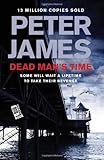
#10: Dead Man's Time (Ds Roy Grace 9)


Dead Man's Time (Ds Roy Grace 9)

Peter James

Ranking has gone up in the past 24 hours 13 days in the top 100

Release Date: 6 Jun 2013


Buy new: £20.00 £11.00


(Visit the Bestsellers in Books list for authoritative information on this product's current rank.)


via Amazon.co.uk: Bestsellers in Books

Blue is the Warmest Colour translation hurried into print after Cannes victory


Publication of graphic novel's English version brought forward in wake of film version's film festival triumph


Small Canadian publisher Arsenal Pulp Press is pushing forward publication of its English translation of French graphic novel Le bleu est une couleur chaude following the triumph of the film version of the story at Cannes this weekend – the first adaptation of a comic ever to take the top prize at the film festival.


The story of a passionate lesbian romance, Julie Maroh's graphic novel was published by the Belgian graphic novel press Glénat in 2010. An English language version, titled Blue Angel, was originally due out in November, but after the film adaptation Blue is the Warmest Colour won the Palme d'Or in Cannes on Sunday, Arsenal Pulp is now readying the translation for publication in September.


"[We] are indeed expecting lots of interest," said publisher Brian Lam. "We were first approached by the agent of the original publisher Glénat a little over a year ago; she thought we would be interested in it given our interest in LGBT and graphic novel titles. We appraised it and found it to be a profoundly moving coming-of-age story with beautiful artwork; at the time, we didn't know a film was involved."


Arsenal Pulp signed the book up in October 2012. "By then, we were told the film was in production and that the producers hoped to submit it for consideration at Cannes. We were thrilled but not entirely optimistic; after all, who doesn't want to have their film at Cannes?" said Lam. "We were amazed, then, when at the end of April we learned that the film was accepted into the official competition, only to have word-of-mouth quickly build, leading to the stunning Palme d'Or win last Sunday."


Associate publisher Robert Ballantyne added: "We are thrilled for the filmmakers, for Julie and her French publisher, and very excited for the impact this great story will have for LGBT culture and politics wherever it appears. It is a graphic novel worthy of the highest praise and broad translation."


Maroh herself wrote on her website that she was "absolutely overwhelmed, amazed, and grateful" for the "wonderful and breathtaking" win in Cannes. "Last night I realised this is the first time in cinema's history that a comic book had inspired a Palme d'Or movie and this idea petrified me," she wrote. "It's a lot to carry."


When writing the graphic novel, said Maroh, she didn't set out to "make a book in order to preach to the choir, nor only for lesbians". "Since the beginning my wish was to catch the attention of those who had no clue, had the wrong picture, based on false ideas, hated me/us," she said. "I'd like that myself, those that I love, and all the others, would no longer be insulted, rejected, beaten up, raped, murdered … because of our differences. Everyone had the opportunity to interpret and identify freely with the book, but I really wanted to clarify my intention with it, once again. But it also served to tell a story of how a romantic encounter happens, how a love story builds, collapses, and what remains of the love that was awoken after a breakup, a mourning, a death. This is what [film-maker Abdellatif Kechiche] was interested in. Neither of us had a militantly activist intent."


Maroh did, however, criticise the film's explicit sex scenes, saying they brought to mind "a brutal and surgical display, exuberant and cold, of so-called lesbian sex, which turned into porn, and made me feel very ill at ease … I lost the control of my book as soon as I gave it away to be read. It's an object meant to be handled, felt, interpreted."


guardian.co.uk © 2013 Guardian News and Media Limited or its affiliated companies. All rights reserved. | Use of this content is subject to our Terms & Conditions | More Feeds


via Books: Fiction | guardian.co.uk

Poetry is not drowning, but swimming into new territory


News of plummeting sales do not, as some fear, indicate a dying art. In fact, the genre is adapting well to a new publishing age


On Wednesday evening, a collection of poetry in support of the jailed Russian punk rock group Pussy Riot won the award for Best Poetry Anthology in the 2013 Saboteur awards for indie poetry.


Catechism: Poems for Pussy Riot features the work of 110 poets and two dozen translators and began with a Facebook appeal by its editors Mark Burnhope and Sarah Crewe for poems in support of the women, in the run-up to their appeal hearing in October 2012. Ali Smith, Deborah Levy, Phill Jupitus and John Kinsella are among the contributors to the collection, which was published as an ebook in partnership with English PEN, and is now available in print-on-demand.


It beat four other anthologies to the award: The Centrifugal Eye's Fifth Anniversary Anthology (edited by EA Hanninen), Rhyming Thunder – the Alternative Book of Young Poets (Burning Eye), Sculpted: Poetry of the North West (Salt, edited by L Holland and A Topping) and Adventures in Form (Penned in the Margins, ed. Tom Chivers).


It's notable that one of the contenders, Salt, recently announced that they are abandoning the single-author collection as being financially unsustainable. And indeed, hardly a week goes by without someone assuring us that poetry is dying. Given the decline in sales that they have experienced, with a 50% drop over the last five years, half of which happened in the last 12 months, Salt's decision is perfectly reasonable. No commercial press can possibly support those numbers without looking to change their business model.


The stark truth is that poetry publishing is not going to be particularly commercially viable, given that the total value of UK poetry sales has gone from £8.4m in 2009 to £6.7m last year. Mind you, Salt seems to have been particularly severely affected if you compare its fall of 25% last year to the overall 15.9% drop. In one sense, it could be argued that Salt's decision is good news for Faber, Bloodaxe, Carcanet, Shearsman and all those Saboteur shortlisted indies, since it means that there are fewer big fish swimming round a shrinking pool.


However, it would be a serious error to equate the demise of a single publisher with the overall state of health of poetry. Even Salt director Chris Hamilton-Emery has noted the "massive increase in the number of poetry publications coming out", and he's right. Jim Bennet's extremely useful Poetry Kit website lists more than 400 UK poetry publishers, and while the list is broad (it includes Faber) and perhaps a bit out of date (it also includes Salt) it shows the range of publishers around. As for the US, a quick look at the SPD site indicates that the situation there isn't much different.


Most of the smaller presses are amateur, in the strict sense of the word. They are often run by poets, for poets, and on a shoestring budget with the noble, and possibly unattainable, financial aim of breaking even. Frequently their publications stretch the definition of "book" to the limit, with gatefold pamphlets, tiny chapbooks, CDs, poster poems and even poems folded into matchboxes featuring on their lists. The publishers generally do the typesetting, design and sewing themselves. These presses belong to a DIY tradition that runs back through the Gestetner and Xerox revolution if the 60s and 70s back to William Blake and earlier.


And these are just the traditional print publishers. There are, according to the Southbank Centre Poetry Library, "hundreds of thousands" of dedicated poetry websites out there, presenting poems and poets through the full range of digital media, including video, audio, animated text, ebooks and interactive hypertext.


The Poetry Kit also advertises regular reading events; there are more than 250 open mic events listed in the UK alone, not counting festivals and one-off readings. For many younger poets, open mics and poetry slams represent their first interaction with an audience – their first "publication". In fact, some on both sides of the spoken word/print divide see the oral poetry movement as one of the biggest threats to print publication. After all, who needs to have a book out when you can perform to enthusiastic live audiences every week of the year? It's enough to dismay the lovers of the printed artefact.


I might have felt that way myself, but the experience of reviewing Rhyming Thunder, an anthology of slam and performance poetry from Burning Eye, one publisher which hasn't made it on to the Poetry Kit list yet, changed my mind. Here are a loose group of young poetry performers who are clearly pleased to find themselves captured in the pages of a "real" book. Indeed, some of them even have single-author collections out. A number also have their own web presences. At what might be considered the other end of the spectrum, Robert Pinsky announced just the other day that he finally has a website of his own. On Twitter.


So, where some see poetry as a dying art, I see it as an early and enthusiastic adopter of new technologies, partly because it has to be. Why? Well, if selling what you're making isn't going to make anyone rich, but you want to share it with those people who are interested, then you have to work out the cheapest way to do so. And right now it looks like that way is a mix of online, performance and print, with each supporting the other in a new model of publishing, one in which the printed collection is no longer the only accepted mode of publishing but remains a key part of the package. And given the apparent reluctance of most bookshops to stock verse, they'll be sold mainly online and at events. It may not be big business, but that's not what it's setting out to be.


In 1923, Virginia Woolf hand-set the type for the Hogarth Press edition of Eliot's The Waste Land. The edition was limited to 470 copies and I doubt it made much money, almost certainly not enough to pay for the time and effort invested in it. It was reviewed in the Manchester Guardian on 31 October that same year, a review that ends with the words "so much waste paper". The reviewer, Charles Powell, probably thought that Eliot's "mad medley" represented the death of poetry. But poetry's a resilient beast and current reports of its impending demise will, I'm sure, prove to be somewhat exaggerated.


guardian.co.uk © 2013 Guardian News and Media Limited or its affiliated companies. All rights reserved. | Use of this content is subject to our Terms & Conditions | More Feeds


via Books: Poetry | guardian.co.uk

#10: The Hive


The Hive

Gill Hornby

Ranking has gone up in the past 24 hours 3 days in the top 100

(4)


Buy new: £12.99 £8.57

14 used & new from £7.24


(Visit the Bestsellers in Books list for authoritative information on this product's current rank.)


via Amazon.co.uk: Bestsellers in Books

Jack Vance tributes pour in after his death


George RR Martin and Neil Gaiman among the hundreds paying tribute to a science fiction 'grandmaster'


Tributes from the great and the good of the science fictional universe have been pouring in following news of the death of author Jack Vance late on Wednesday.


Vance died in his sleep, aged 96, at home in California on Sunday, his family announced yesterday. He leaves behind more than 50 novels and 100 short stories. Perhaps best known for his Dying Earth stories, set far in the future where "the sun is feeble and red. The continents have sunk and risen. A million cities have lifted towers, have fallen to dust", and "in the place of the old peoples a few thousand strange souls live", Vance is counted as an influence by many of today's authors, from Ursula K Le Guin to George RR Martin.


Learning of his death, the Game of Thrones author – who edited a tribute anthology to Vance in 2009 featuring stories set in Vance's universe by writers including Neil Gaiman and Michael Moorcock – called Vance "one of the grandmasters of our genres, and IMNSHO one of the greatest writers of our times", and said that yesterday was "a sad day for fans of science fiction and fantasy".


"I had the honour of meeting Jack a few times, but I cannot claim to have known him well. But he had a huge influence on me and my work, and for the past 50-some years has ranked among my very favourite writers. Every time a new Jack Vance book came out, I would drop whatever else I was doing and read it. Sometimes I did not mean to, but once you cracked the covers of a Vance book, you were lost," wrote Martin on his blog.


"Vance's Dying Earth ranks with Howard's Hyborian Age and Tolkien's Middle Earth as one of the all-time great fantasy settings, and Cugel the Clever is the genre's greatest rogue, a character as memorable as Conan or Frodo (either of whom Cugel would likely swindle out of their smallclothes, had they ever met)."


Vance, said Martin, "left the world a richer place than he found it", and "no more can be asked of any writer".


The bestselling science fiction author John Scalzi described Vance as "a genuine great in the field, one whose work captivated generations of science fiction and fantasy readers and writers, many of whom went on to be greats themselves".


"To say he will be missed is obvious. To say his influence will continue to echo through the years is a reassurance," said Scalzi. "My thoughts to his family, friends and many fans today."


Steven Gould, author of the science fiction novel Jumper and new president of the Science Fiction Writers of America, said Vance was "one of the greatest science fiction and fantasy writers of the 20th century", and that his novel The Dragon Masters "seized me by the throat at a young age and has never let me go".


Gaiman tweeted "thank you for the dreams and the magic, Jack Vance", while fantasy author Scott Lynch said that "every time I think I've got it tough, I remind myself that Jack Vance went legally blind around 70 and kept writing for two more decades".


"Farewell to one of the great ones," tweeted the award-winning author Elizabeth Bear. "I thought he was eternal."


Hundreds of tributes from fans have also been posted overnight on the website Foreverness, dedicated to the author, where his family also left a message for readers. "Recognised most widely as an author, family and friends also knew a generous, large-hearted, rugged, congenial, hard-working, optimistic and unpretentious individual whose curiosity, sense of wonder and sheer love of life were an inspiration in themselves. Author, friend, father and grandfather – there will never be another like Jack Vance."


guardian.co.uk © 2013 Guardian News and Media Limited or its affiliated companies. All rights reserved. | Use of this content is subject to our Terms & Conditions | More Feeds


via Books: Fiction | guardian.co.uk

Wednesday, May 29, 2013

Jack Vance dies aged 96: master of bold and bizarre science fiction


Prolific writer of planetary adventures and epic fantasy


Jack Vance, who has died aged 96, was a writer of science fiction and high epic fantasy whose work was oddly at variance with the journeyman genre in which it first appeared. His prose – detailed, exotic, resonant of feelings, sounds and fragrances – soared well above the requirements of the genre; he described alien landscapes with bizarre and inventive energy in language that was ambitious, wordy, sometimes lurid, always bold. One of his best-known titles, The Dying Earth, began as a collection of short stories in 1950 and eventually expanded to become a whole series of books set in a far-off future in which the sun is slowly going out, and technology and magic coexist.


His output was vast: he published more than 60 books, some under pseudonyms, among them 11 mystery novels, three of them as Ellery Queen. In addition, he wrote some of the first, and perhaps best, examples of "planetary adventures". He, along with Edgar Rice Burroughs in the early years of the 20th century, and his contemporaries Leigh Brackett, Philip José Farmer and Edmond Hamilton, helped to create the idiom, and his novel Big Planet (which first appeared in a magazine in 1952, and was subsequently revised and expanded) is probably his best of this kind.


Vance's lasting impact may lie in the influence he had on other writers. Many have spoken of the way in which his imagery freed their own imaginations, while others may be argued as having come under Vance's thrall. These include writers as diverse as Ursula K Le Guin, Jack L Chalker, Michael Moorcock, George RR Martin and Gene Wolfe. The critic John Clute has even suggested that JG Ballard's "peneplainal venues" might be traced back to Vance.


But Vance himself was an unpretentious craftsman who consistently claimed to have no interest in the art of writing, saying that he wrote only to make money – which, by working as fast and prolifically as he did, he managed to achieve. The wish to present oneself as a humble wordsmith, writing fast and commercially, was not unusual for a male writer of Vance's generation; he was first published in the commercial-fiction magazines that were still appearing in the US after the second world war. It was a market where writers were treated badly, payment was poor, readership uncritical, and the work often arbitrarily truncated or padded out for reasons of space. Vance saw himself as a modest producer of readable text, with no aspiration towards literary pretension or status. Even when he graduated to publication in book form, many of his titles came out in ephemeral paperback editions, which were carelessly edited and illustrated with garish covers. Even so, these copies sold better than most, disappeared rapidly from the bookstalls and in certain circles soon became collectable editions.


Vance was born in the Pacific Heights area of San Francisco, the middle child of five. His mother, Edith, was a prominent socialite, but his father was absent in France, attached to the Red Cross – after he returned from abroad the father moved to Mexico and was never again seen. When Vance was five his maternal grandfather took in the young family, and Vance was raised on a ranch near Oakley, California. From his youngest years, he suffered from poor eyesight but he read avidly and developed his lifetime love of Dixieland jazz.


In 1937, after a series of dead-end jobs, Vance entered the University of California in Berkeley, where he read physics, journalism and English. For one class assignment Vance wrote a short story, his first piece of science fiction. The professor dismissed it with such disdain that Vance threw it away afterwards, but always thought of the professor's remarks as his first bad review.


Early in 1941, bored with the academic life, Vance joined the US navy and was posted to Pearl Harbor, in Hawaii. Navy life turned out to be menial and miserable, so Vance resigned and was discharged "with prejudice". A week after he arrived home, the Japanese launched their attack on the base.


He returned to university and graduated in 1942. Later he joined the Merchant Marine as an ordinary seaman (first having memorised the eye-chart so as to fool the medics) and was twice torpedoed. He began writing stories for publication while still at sea.


In 1946, he met and married Norma Ingold, and they lived in the same house in Oakland, California for the rest of their long marriage. They had one son, John. Vance claimed that Norma worked on his stories and books as hard as he did, but never went into detail about what he meant by this. He rarely gave interviews about his writing, and there are few clues in his autobiography, This is Me, Jack Vance! (2009) which concerns itself largely with harmless family reminiscences, and descriptions of extended vacations around the world with Norma.


Early in the 1980s Vance was diagnosed with glaucoma, but an attempted operation went wrong and afterwards he was declared legally blind. He continued to write with Norma's assistance, and later with the aid of special computer display software, but from that time on most of his output consisted of the bringing together, revising and expanding of his earlier stories.


He won many awards: among them three Hugo awards, a Nebula, and a World Fantasy award for lifetime achievement. In 1997 he was made a Grand Master of SF, by the Science Fiction Writers of America.


I met him once, when in 1981 he was guest of honour at a science-fiction convention in Rotterdam. He was at that time the best-loved and highest-selling SF writer in the Netherlands. His fans were eager to meet him. A genial but private man, he appeared on the platform bearing a ukulele and a kazoo. He said he would answer one question only – from the floor someone asked if he ever used personal experience in his books. He replied "I am not an egotist!" and started strumming.


He was thus a genuine enigma to his admirers, but his many works are still in print and available online and those will remain his testament.


Norma died in 2008.


• Jack (John Holbrook) Vance) writer, born 28 August 1916; died 26 May 2013


guardian.co.uk © 2013 Guardian News and Media Limited or its affiliated companies. All rights reserved. | Use of this content is subject to our Terms & Conditions | More Feeds


via Books: Fiction | guardian.co.uk

George RR Martin fans can expect more Ice and Fire in 2014


Good news for those of us impatient for more from the Game of Thrones author: he's busy compiling a companion 'GRRM-arillion'


News from the blogosphere for all you fellow George RR Martin fans out there - the author has been hammering out the pages of his companion to the Song of Ice and Fire series. According to a blogger at a recent convention attended by Martin, "he was supposed to write 50,000 words – he wrote 250,000", and "the premise of the [World of Ice and Fire] book is that it is a copy of a tome presented to [the character Robert Baratheon] just after the Rebellion".


I thought I'd check the details with Martin's publisher HarperCollins, and they tell me that actually, "the book's only likely to be around 100,000 words in length". Still sounds like fun, though, and as a Tolkien fan, and one who has even gone so far as to read some of The Silmarillion, I'm particularly pleased that, according to the blogger, the extra words "have been put in a file for a project they are now calling the 'GRRM-arillion'. ".


Martin himself has described the book as "the concordance … a compendium of the history and legends of the world of Westeros. A coffee table book, lots of gorgeous art from such talents as Ted Nasmith, Justin Sweet, and others", and said last summer that he was "making good progress on this one of late, lots of great historical stuff that I think my readers will enjoy. Never-before revealed details of Aegon's Conquest, the War With the Faith, The Dance of the Dragons, the Paramours of Aegon the Unworthy, etc."


His co-author Elio M García, meanwhile, of the fan site Westeros, said earlier this month that the compendium "won't be out this year … but that's because it's becoming rather cooler. More pages, more new history and details, more art. Like the story of the fall of the Tarbecks and the Reynes, the surprising person from whom the Lannisters are descended, more history of the Vale and the arrival of the Andals, and a good deal more. We're working quick as we can, but there's also more art to commission and that means it'd be safest to aim for next year."


The official line from Martin's publisher Jane Johnson is that The World of Ice and Fire will be out in spring 2014 – a bit of a delay, but "more to do with illustrative complications and global publishing schedules than the writing, and I certainly wouldn't want fans getting the impression that George is working on [it] at the expense of The Winds of Winter" – the next novel in the series and the book we're really all desperate for.


So there's a while to wait. In the meantime, I will comfort myself with a reread of The Winds of Winter chapter Martin provided online earlier this year. Winter is definitely coming - we just have to be patient.


guardian.co.uk © 2013 Guardian News and Media Limited or its affiliated companies. All rights reserved. | Use of this content is subject to our Terms & Conditions | More Feeds


via Books: Fiction | guardian.co.uk

Rudyard Kipling 'admitted to plagiarism in Jungle Book'


A letter by the author has surfaced in which he writes that 'it is extremely possible I have helped myself promiscuously'


A letter in which Rudyard Kipling admits that "it is extremely possible that I have helped myself promiscuously" from other stories when writing The Jungle Book has been put up for sale.


The one-page letter, written and signed by Kipling in around 1895, sees the author writing to an unknown correspondent following an inquiry about "The Law of the Jungle" – the rules of life in the jungle taught by Baloo to Mowgli in The Jungle Book, and later turned into a poem by Kipling in The Second Jungle Book.


"Now this is the Law of the Jungle – as old and as true as the sky; / And the Wolf that shall keep it may prosper, but the Wolf that shall break it must die," writes Kipling in his poem. "The Kill of the Pack is the meat of the Pack. Ye must eat where it lies; / And no one may carry away of that meat to his lair, or he dies."


The letter, acquired by Adam Andrusier, director of Adam Andrusier Autographs, at the New York Antiquarian book fair last month from a fellow UK manuscript dealer, sees Kipling acknowledging that parts of the hierarchical jungle code may have been borrowed from other sources.


"I am afraid that all that code in its outlines has been manufactured to meet 'the necessities of the case': though a little of it is bodily taken from (Southern) Esquimaux rules for the division of spoils," Kipling wrote in the letter. "In fact, it is extremely possible that I have helped myself promiscuously but at present cannot remember from whose stories I have stolen."


Andrusier is selling the letter for £2,500, and says that "letters by Kipling that mention his most enduring work are extremely rare".


"A letter that casts new light on an author's celebrated work tends to capture the imagination of the collector," said Andrusier. "Personally, I rather like his candidness about the possibility of his plagiarism in The Jungle Book; I think people tend to have a misapprehension about writing needing to be unswervingly original, when so much literature is either consciously or unconsciously borrowed."


guardian.co.uk © 2013 Guardian News and Media Limited or its affiliated companies. All rights reserved. | Use of this content is subject to our Terms & Conditions | More Feeds


via Books: Fiction | guardian.co.uk

Wu Ming's top 10 utopias


From William Gibson to Robert Macfarlane, the Italian 'collective' novelists pick books that construct utopian worlds and explore our impulse to build them


It's good that you want us to write about our Top 10 utopias. These days, everyone is asking us to write a piece on the Italian political situation, and we keep answering: "You already know what's going on." A character from comedy became a charismatic leader, adopted both a superficially left-leaning phraseology and a decidedly right-wing macho posture, and kept screaming: "Neither left nor right!". He showed the masses a shortcut to clean their souls: "Good citizens are honest! Politicians are the only culprits!" By focusing on scapegoats and denouncing only the surface of the system (ie politicians), the new movement is stabilising the system's core, so austerity politics can go on, exploitation can go on, and social inequality doesn't suffer any threats.


When dystopia is not dystopian anymore utopia becomes, more than ever, a vital necessity.


1. Archaeologies of the Future: The Desire Called Utopia by Fredric Jameson


While writing about science fiction, Jameson draws on German philosopher Ernst Bloch in order to revive an inspiring distinction between the "utopian programme" and the "utopian impulse". If utopia is about imagining a different world or at least a different way of living, then a "utopian impulse" is at work in many actions and choices of our everyday life. Even a walk in the woods creates a different, temporary world around us, revealing that we'd rather live in another way. There are books about utopian programmes, displaying carefully constructed utopian worlds, and there are books about the utopian impulse. The titles we chose fall in both categories.


2. Kirinyaga by Mike Resnick

On a terraformed planetoid called Kirinyaga (the Gikuyu name of Mount Kenya), a Gikuyu community tries to live as their ancestors did before Kenya was colonised. For Koriba, the self-appointed mundumugu (witch doctor) of the community, this is a dream come true. It goes without saying that things don't go as he expected, but after the predictable failure of the utopian programme, Kirinyaga becomes a much more intriguing book, a book on Koriba's return to a transfigured, futuristic Nairobi and the unrelenting utopian impulse which makes him a stranger in a strange city. He's got only two friends: an old man and a clone of Ahmed of Marsabit (the most famous elephant in the history of Kenya). When he achieves a creative synthesis between utopian impulse and death drive, he finds a way out.


3. Mountains of the Mind by Robert Macfarlane

This is one of the best books on mountaineering ever written. It's the book that explicitly deals with the utopian impulse that drives men and women to suffer cold and fatigue, defy altitude sickness, risk death at every moment, only to see the world from the peak of a mountain, little more than a quick glance before going back down. Until the 18th century, no utopian impulse was associated with mountains. People were not interested in climbing them, reaching their peaks was not yet an expression of the primary metaphor up = good/down = bad. Macfarlane tells the story of how humans became interested in mountains, and turned them into a realm of utopia.


4. No Picnic on Mount Kenya by Felice Benuzzi


This is both about Kenya and mountaineering as utopia. On a 1943 equatorial night, three Italian prisoners of war escaped from camp 354 near Nanyuki, in order to climb Mount Kenya. They had secretely prepared their escape for about eight months. After two weeks of primeval freedom and fierce hunger, they reached Point Lenana (16,355 ft). Then they went back to the camp, to face unavoidable punishment. Was it worth doing it? Of course it was. With their romantic gesture, they overcame the horrific boredom and humiliation of the concentration camp. One of them, Felice Benuzzi, told the story in two books, one in Italian (Fuga sul Kenya) and the other in English (No Picnic on Mount Kenya). Wu Ming 1 and Roberto Santachiara just wrote a narrative biography of Benuzzi entitled Point Lenana.


5. Timeless Earth by Peter Kolosimo

6. Spaceships in Prehistory by Peter Kolosimo

7. Not of this World by Peter Kolosimo

8. Brothers of Infinity by Peter Kolosimo


We chose four of them, but we've become re-obsessed with all the books this guy wrote in the 1970s, stuff that we used to read when we were kids. They were all bestsellers, each of them sold hundreds of thousands of copies. We're even planning a book about Kolosimo. He was a member of the Italian communist party who spoke fluent German and Russian and was in touch with visionary scientists from all over the Eastern Bloc. He thought that advanced civilisations existed in other parts of the galaxy, and most likely they had achieved socialism long ago. He stated that delegations of those "comrades from other planets" had visited Earth in ancient times, and tried to prove it by pointing at pictorial representations allegedly showing starships landing, cosmonauts in full attire etc, or interpreting passages from the Bible as thinly disguised descriptions of close encounters of the third kind. He also wrote about weird science and reinterpreted alchemy through materialist dialectics. His books always had epigraphs with poems by Pablo Neruda. Utopian fuel for our young brains. Psychedelic Stalinism. We never recovered from reading that wondrous stuff.


9. The Gernsback Continuum by William Gibson

We talked a lot about this famous short story, we even held conferences about it, saying that nowadays it ought to be turned upside down. More than 30 years ago, Gibson suggested a therapy for post-utopian melancholia. The main character is haunted by images of the futures that never were, the kinds of future that pop culture dreamed about in the late modern age – ie from the 1930s to the early 1960s – the era of classic science-fiction prefigurations. All of a sudden, this guy sees futuristic airplanes flying above him, futuristic landscapes appearing on the horizon, happy Jetson-like families on futuristic cars floating in the air. It's the semiotic garbage left behind when the future withdrew from our world. He recovers from this peculiar illness by following the advice of a friend: Look at ugly, trashy films. Get stuffed with junk TV. Consume the lowest products of pop culture with no sense of guilt. Do not feel sorry for the loss of the future.

Nowadays, if we had to rewrite the story, the therapy would be the illness and the other way around. In plain words: forced overconsumption of cultural trash is what most westerners grew up in. They grew up in the eternal present of late capitalism, with no one encouraging them to envision any kind of future. This cultural disability can be cured by cultivating a renovated desire of future worlds. Let's brush the dust off those old Robert A Heinlein books. Let's take back our Cordwainer Smiths, our Jack Vances, our Philip J Farmers, and our Ursula K Le Guins. Let's reconquer utopia.


10. Breckenridge and the Continuum by Robert Silverberg

Another short story with the word "continuum" in the title, that was the subject of one of our conferences. This is slightly older than Gibson's one. It is clearly a tribute to Joseph Campbell's The Hero with a Thousand Faces, and it's also a demonstration of faith in the art of telling stories. How intriguing that, not long after he wrote it, Silverberg retired from writing for five years. Breckenridge is a man of the 20th century that, all of a sudden, finds himself in an extremely remote future. Probably hundreds of thousands of years separated this underpopulated, desertic world from the one where he used to live. He joins a group of stranded mutants and becomes the storyteller, every night, around the campfire, he tells them distorted, half-forgotten versions of Greek and Hebrew myths. Little by little, his awareness of the structure of those stories becomes the skill by which he'll solve an enigma and give a new beginning to civilisation. Novelists can do that.


guardian.co.uk © 2013 Guardian News and Media Limited or its affiliated companies. All rights reserved. | Use of this content is subject to our Terms & Conditions | More Feeds


via Books: Fiction | guardian.co.uk

Tuesday, May 28, 2013

Rereading Stephen King, chapter 21: It


At 1,400 pages, this is a massive novel – and a huge achievement by a writer showing off all of his storytelling skills


It is one of King's most enduring novels; it's crossed over from just being read by his fans, and become a part of a wider cultural consciousness. There's something universal about it; something that feels like a summation of King's previous work in the horror genre. I've mentioned, in the past, the slur that King created his novels by simply taking things with the potential to be creepy – empty hotels, dogs, disease – and ramping up the horror. For his detractors, It is possibly the most obvious example. But his use of classic horror tropes here was wholly intentional; and, by using them, he created what is likely his scariest novel in the process.


It is intimidatingly huge. Fourteen hundred pages long in my printing (the only bigger novel I own is Infinite Jest), and famously weighing nigh-on four pounds, it's a challenge to hold, let alone read. I don't recall a huge amount about the physical experience of reading most novels. The book is all, for the most part. But I remember reading It in the summer. It is, as has been mentioned before on this very site, a summer novel. I spent a week of the school holidays in Derry, King's fictional Maine town, with my fictional friends in the novel's so-called Losers' Club, during the long summer of 1958. I knew them all: Bill, Bev, Richie, Ben, Mike, Stan and Eddie. We were all roughly the same age, we were all misfits, and all that any of us wanted was to stop being afraid. I had things going on in my own life that I couldn't deal with; their problems were bigger than mine, but I felt that they would have understood me regardless. They would have accepted me.


And then they grew up, and I got to see where they landed. The book is essentially two novels, featuring the same characters during different parts of their lives – teenagers in 1958, and adults in 1985 – as they attempt to deal with their hopes and fears; and with the titular menace. The monsterpresents itself as that which you are most afraid of; it finds your fears, and feasts on them. It's a creature beyond any that King had unleashed before that point, because it represented every evil: all childhood fears manifested.


Of course, the most famous and lasting of those manifestations is Pennywise, the clown that – thanks, in no small part, to Tim Curry's performance in the surprisingly enduring TV movie adaptation – has come to be a face of the novel itself. I'd never been scared of clowns, but something about Pennywise taught me how to be. As the novel goes on, we see it manifest as vampires, werewolves, zombies, witches, a mummy, all classic horror icons; but Pennywise is the one that endures, the creation that is wholly King's. In Time magazine, around the book's release, King stated that his thought had been to "bring on all the monsters one last time … and call it It" . He wanted to sum up all of childhood in those fears, and then cast those fears off; to write a novel about the loss of childhood innocence. Pennywise – an image associated with laughter and innocent joy – was his trump card. Of course, Pennywise isn't the novel's biggest terror. The most prominent notions of fear in the novel come from the Losers' Club themselves: their home lives, the things that have made them pariahs.


I can't read It for pure pleasure now, not really. I'm a different reader, and there are things that I would critique, if I had to: common complaints, about how long the novel is; or about questionable scenes concerning childhood sexuality that shocked me when I was a kid. (One particular scene involving the young Losers' Club taking part in what amounts to an orgy shocks me to this day.)


Looking at it as a writer, it's incredible: a structural marvel, an author at the height of his powers, and he's showing off. Juggling dual narratives, historical interludes, an astonishing number of characters, King somehow makes it all seem effortless. It wasn't, of course – at the end of the novel we are told that it took him four years to write – but it seems to emerged from his imagination fully formed. It's perhaps the best example of King's astonishing skill with focalisation, as well, moving between different character viewpoints. Even after multiple reads over the course of my life – five? six? I can't say for sure – it still wows me.


Connections


This novel sits in the middle of much of King's work: in Derry, the fictional town thatis the setting for so many stories; in The Shining's Dick Halloran, saving Mike Hanlon in the Black Spot fire; in the links with the Dark Tower, especially Stuttering Bill and the Turtle (long story for another time); in Mike Hanlon, popping up in Insomnia; in the mentions of the towns from Children Of The Corn. And, most powerful of all, in 11/22/63: when the time-travelling main character visits Derry and meets Bev and Richie. I felt as he did; travelling back to somewhere that I knew, to meet people that I knew from another time.


There's something else that I think is interesting. King's eldest son, Joe Hill (one of the three kids that It was dedicated to) has recently published an excellent and hugely unsettling novel called NOS-4R2. Just as It was a culmination of King's work in the horror genre, Hill has described NOS-4R2 as his "senior PhD thesis on horror". There's a moment in the book where a map is shown of worlds that we cannot visit through normal means. One of them is Pennywise's Circus. Maybe everything is just on the path of a beam


guardian.co.uk © 2013 Guardian News and Media Limited or its affiliated companies. All rights reserved. | Use of this content is subject to our Terms & Conditions | More Feeds


via Books: Fiction | guardian.co.uk

Bridget Jones still mad about the boy


Title of Helen Fielding's next novel in the bestselling series revealed, but identity of boy in question remains mysterious


The title of Helen Fielding's new Bridget Jones novel, to be published on October 10, has been revealed as Bridget Jones: Mad About the Boy.


It's 14 years since the last Bridget Jones novel, Edge of Reason, was published. Fielding has previously said that she "lost her voice with Bridget for a long time … It was very easy to write and be honest, then I got all self-conscious".


The new novel promises to find Bridget older if not wiser, and deeply embroiled in the contemporary virtual landscapes of internet dating, Twitter and other social media. Fielding recently annotated a first edition of Bridget Jones's Diary for a PEN auction: her marginalia remark that the dating game is "so much worse now with email, texting, Twitter, Facebook". Judging from an extract released today, things have only got more embarassing for the hapless heroine:


Wednesday 24 October 2012


11.27 pm Just presss d SEND. Iss fineisn't it?


You see, this is the trouble with the modern world. If it was the days of letter-writing, I would never even have started to find his address, a pen, a piece of paper, an envelope, a stamp, and gone outside at 11.30pm to find a postbox. A text is gone at the brush of a fingertip, like a nuclear bomb or exocet missile.


DATING RULE NO:1

DO NOT TEXT WHEN DRUNK


There has been speculation that the new novel would see Bridget moving on from the perils of drinking and dating to the pitfalls of parenthood – Fielding has had two children since the last book was published – but "when asked which boy Bridget was mad about, Fielding merely raised one eyebrow enigmatically".


guardian.co.uk © 2013 Guardian News and Media Limited or its affiliated companies. All rights reserved. | Use of this content is subject to our Terms & Conditions | More Feeds


via Books: Fiction | guardian.co.uk

Commonwealth writers' Commonwealth writers


The regional winners of the Commonwealth book prize 2013 write about their favourite books from the prize's catchment area


EE Sule

Midnight's Children by Salman Rushdie

My favourite novel, over the years, has remained Salman Rushdie's masterpiece, Midnight's Children. On the one hand is its electric language that has, at every encounter, given me great inspiration; and on the other hand is the incredible, mind-boggling blend of the public and the private spheres of life which shows off how dazzlingly intricate and versatile a writer's mind can be. The novel is as deep as it is lengthy, and has sufficient intrigues and running humour to keep one reading to the end, and even wanting more. Coming from a tradition where writing cannot avoid being political, Midnight's Children remains, for me, the best example of how to engage the public sphere.

• EE Sule is the regional winner for Africa, with Sterile Sky


Michael Sala

Darkness at Noon by Arthur Koestler

My favourite novel published by a writer in the Commonwealth. I love that the most interesting relationship in the book is conveyed entirely through the sound and rhythm of two people knocking on a wall. It's a very tightly-written book that, while set mainly in a prison and told only from one character's perspective, never feels claustrophobic. Although the fate of the protagonist – an old Bolshevik imprisoned during the Stalinist purges – is never really in doubt, the deceptively simple language and brilliant use of memory, the intensely focused imagery and the inventive use of perspective, carry the reader to a conclusion that is both startling in its psychological intimacy and deeply moving. It is, in my view, a perfect historical novel.


• Michael Sala is regional winner for the Pacific, with The Last Thread


Nayomi Munaweera

Wave: A Memoir of Life after the Tsunami by Sonali Deraniyagala

It's not often that we are taken on a journey into the true heart of grief and this was my experience reading this astounding memoir. The author lost her parents, her husband and two sons in the 2004 tsunami in Sri Lanka. I read this book on an international flight and often had to rest my head against the glass to weep. The book made me intensely grateful to be flying back to my loved ones. I am astounded by her courage and this is a book I will carry with me all my days.

• Nayomi Munaweera is the regional winner for Asia, with Island of a Thousand Mirrors


Ezekiel Alan

A Clockwork Orange by Anthony Burgess

Growing up in Jamaica I was mainly exposed to literature from the Caribbean and other parts of the Commonwealth. There were many wonderful reads, from Great Expectations to Paradise Lost and, closer home, Claude McKay's delightful Banana Bottom. It was much later, however, that I came across the style of writing which would eventually influence my own work. It started with the American masterpiece Trout Fishing in America by Richard Brautigan. Later, I came across Anthony Burgess's A Clockwork Orange which stood out for me as an exceptional piece of literature. I found the novel brilliantly unconventional. I was particularly struck by Burgess's literary ingenuity; at times, it seemed he was able to construct comedy from the worst forms of human cruelty and depravity. I remember having an urge to laugh at the unusual prose and bizarre dialect even while I was being confronted with the absolute horror of the story unfolding. It was just so easy to lose sight of the evil that was clearly smiling at you from the pages. This is truly unique storytelling.

• Ezekiel Alan is the regional winner for the Caribbean, with Disposable People: Inspired by True Events


Lisa O'Donnell

Tony Hogan Bought Me an Ice Cream Before He Stole My Ma, by Kerry Hudson

Tony Hogan was my favourite read of 2012. It has a wicked opening line but I'm fairly confident it could not be printed in a family newspaper. Kerry was brought up in a succession of council estates and the story evolved from her own experiences living in Bed and Breakfasts and welfare housing. It is a coming-of-age story about Janie, born into a family of fishwives from Aberdeen and living amidst domestic violence, unemployment drink, and drugs. Janie is a natural survivor and, through all the neglect, abandonment and poverty, you will reach for her in every page. The honesty in Hudson's pen overwhelms with its perception and wisdom. This is a raw tale but not without tenderness and though you'll cry as I did, you will also laugh.

• Lisa O'Donnell is the regional winner for the UK and Europe with The Death of Bees


Review your favourite Commonwealth book and have a chance of winning a set of the five regional winners form the 2013 Commonealth book prize. Find out how to enter here.


• The Commonwealth book prize shortlist in pictures


guardian.co.uk © 2013 Guardian News and Media Limited or its affiliated companies. All rights reserved. | Use of this content is subject to our Terms & Conditions | More Feeds


via Books: Fiction | guardian.co.uk

Monday, May 27, 2013

Can Agatha Christie be political?


Hercule Poirot may not be a highbrow hero, but he still has plenty to teach us about life. Portuguese author José Rodrigues dos Santos on why all literature packs a political punch


Agatha Christie's The Murder of Roger Ackroyd is considered by many to be the finest crime mystery ever written. It tells the story of how Hercule Poirot investigates a killing, and stuns us when he identifies the culprit. Arthur C Clarke's Rendezvous With Rama is the most awarded science-fiction novel ever, and tells the story of an unidentified spaceship that crosses the solar system and leaves behind more questions than answers. José Saramago's Blindness is frequently pointed out as one of the best 20th-century novels in world literature, and it tells the story of a sudden epidemic of blindness in Lisbon.


Apart from the obvious quality of these books – a quality that arises either from their storyline or their written style – what do they have in common? Well, they are not political. Even Saramago, who has never hidden the fact that he was a communist, and an active one at that, never actually wrote an obvious political novel.


What, then, is a political novel? Politics is not necessarily something that involves political parties, as we might immediately assume, but rather an activity related to the management of societies. Decisions and actions that affect us all are politics, but also ideas and concepts. Actually, it's the latter that provide the blueprint for the former.


We can find many quality novels that do have a clear political message. Gustave Flaubert's Madame Bovary questions the social anathema of 19th-century female adultery; George Orwell's 1984 or Animal Farm are powerful critical metaphors for communist totalitarian dictatorships; Eça de Queirós' O Crime do Padre Amaro brings us a strong critique of the Catholic Church's hypocrisy towards priests' celibacy; and John Steinbeck's The Grapes of Wrath shows us the misery spread by unregulated capitalism in the wake of the Great Depression.


Should we say that O Crime do Padre Amaro is a superior novel compared with Blindness because it has a political message? Can we honestly claim that Animal Farm is more literary than The Book of Illusions just because Orwell's novel conveys a political meaning and Paul Auster's novel doesn't? Incidentally, is Dan Brown's The Da Vinci Code a political book? How can we say it isn't if it deals in a critical way with deep political issues such as who Jesus Christ really was, how his legend was shaped for political purposes, the role of women in the religious system of power and what the Opus Dei really is?


These are not easy questions, but they do point in different directions and help us clarify things a bit. A novel can be literary without an obvious political message. And the fact that the novel has a political message is not tantamount to a quality novel.


By the way, who decides what a literary novel is? Is The Da Vinci Code literary? Who can say it isn't? Me? My friends? The newspapers? A committee for good literary taste? Who belongs to such a committee? How was he or she elected? Does each one of us have to obey and accept the critical judgment of such a committee? How many times have committees of the day misjudged a work of art? Nobody cared about Fernando Pessoa's poetry when he was alive, and today he is considered the pinnacle of contemporary Portuguese poetry. Dashiell Hammett was thought of in his day as a second-rate popular author, but today his The Maltese Falcon is cherished as a classic. In his prime, Pinheiro Chagas was praised as an immortal author, but today nobody has even heard of him. If we probe deeper into what is and what is not literature, we find many questions and no solid answers.


So, we get back to the starting point. Should literature be political? Well, some might say this is like asking if art should be beautiful? Yes, by all means, art should be beautiful! Can't we, then, create ugly art? No, we can't! If it's ugly, it's not art, it's a failed attempt at it.


This is an interesting point because, faced with the idea that art has to be beautiful, French artist Marcel Duchamp presented in a 1917 New York art exhibition his latest artistic work, which he called La Fontaine, or The Fountain. It was actually a porcelain urinal made in an industrial factory. La fontaine created an uproar because it introduced the world to a new concept: art that is disgusting. It is ugly, and yet it is art.


Duchamp made a powerful point. He told us that an artwork is what the artist decides. So, what is a literary work? Well, it's what the author decides. Me, you, my friends, the newspapers, the committee for good literary taste may or may not like it; that's not relevant, because art can be ugly and yet be art. A literary work can be political or not political, and yet be a literary work.


Should literature be political? Hell, who cares? It is political if the author thus decides, and it isn't if the author so wishes it. The literary quality of a book is not linked to its political message, in the same way that the artistic quality of a sculpture is not linked to its beauty. They are different issues.


What is, then, a political novel? Can Christie's The Murder of Roger Ackroyd – a simple, albeit interesting, crime investigation – somehow be a political novel? The book does present us with a political message, though probably not even its author is aware of it. And that message is simple: thou shalt not kill. How more political can a message get? Thou shalt not kill is a political order given by the highest ruler of them all, God Almighty Himself. It is a sheer political message, created for social management.


French sociologist Louis Althusser once wrote that when a woman visits a shoe shop and buys high-heel shoes, she is making a clear ideological statement. By wearing high-heel shoes, she is expressing her idea of what society is and what her role in society should be, and what can be more political than that?


So, the question is not indeed if literature should be political. The real question is: could it be otherwise?


• This keynote was presented by José Rodrigues dos Santos at the Edinburgh World Writers' Conference: Lisbon, presented by the British Council Portugal, European Union National Institutes for Culture (EUNIC) and APEL (Association of Editors and Publishers in Portugal) in partnership with the Edinburgh international book festival.


guardian.co.uk © 2013 Guardian News and Media Limited or its affiliated companies. All rights reserved. | Use of this content is subject to our Terms & Conditions | More Feeds


via Books: Fiction | guardian.co.uk

Lev Raphael: Responding to Fans Isn't Always Easy

A funny Tumblr blog talks about book people you can't have a conversation with, including book clubbers and "the YA freak." It ends with authors who don't respond when you praise their books.


Despite what you might think, it's not the easiest thing being an author getting praise,


I've published twenty-five books in many genres since 1990 and had all kinds of comments in all sorts of venues, from airports to bookstores to bathrooms at conferences. Even now, it's a surprise and sometimes awkward, despite the hundreds of readings I've done on three different continents and the many thousands of readers I've met.


When you start publishing, nobody prepares you for the weird experience of being praised in person by a stranger. Not your editor, not your publicist, not your agent. Other authors don't talk about it, either.


The moment is both heartening and a bit embarrassing, even when you're an extrovert. Writing is a bizarre profession. It's a very private art that is also a public business involving reviews, book tours, speaking engagements, interviews and relentless self-promotion if you have the enthusiasm for it. The work you do in your head and your study is constantly exposed for scrutiny--and of course, that's part of the reason you got into the business in the first place.


The hardest comment for me to respond to is "I read your book. It was interesting." I say thank you, but the comment is so general and even guarded, I don't feel that I want to explore why it's muted. The last thing I need is a stranger telling me how my book is lacking in some way, especially since some readers feel no constraints in what they share with authors. The flip side is people who rave about one of your books as if it's a work of genius. You're obviously pleased they like it, but their enthusiasm can be off-putting, since you know all the ways the book falls short. At least you do if you're honest.


Then there are the people who compare you to authors you don't like and don't read. Again, a thank you is what I offer in those cases. People who ask specific questions about where an idea came from, what I'm currently working on, or what my routine is like, make it easier to respond.


But I find the safest thing is to get onto comfortable turf and ask my fans what they're reading now, what they think of it, and keep the focus on them. It's often informative and feels less like hero worship or an inquisition. The most honest thing when the praise seems on-target and measured is to share how much it means to hear the compliments.


The best conversations result when people are writing themselves, because then we can talk about craft and writing workshops and the business, and I can offer encouragement. That's what I've gotten from many other writers, and I like to pass it on whenever I can.


via Books on HuffingtonPost.com

Live webchat: Sarah Churchwell on F Scott Fitzgerald and Gatsby


Post your questions now ahead of the discussion on Friday 31 May at 1pm for a chance to win a copy of Churchwell's new book on Fitzgerald's masterpiece


On Friday 31 May, at 1pm, Sarah Churchwell, F Scott Fitzgerald authority and the author of a new book about The Great Gatsby, Careless People will join us for a live webchat.


Sarah Churchwell is Professor of American Literature and Public Understanding of the Humanities at UEA, and the author of The Many Lives of Marilyn Monroe and co-editor of Must Read: Rediscovering the Bestseller. Sarah is also an expert and passionate advocate for Fitzgerald's genius, so this is a great opportunity to find out more about this wonderful writer and what made him tick. Or, indeed, if you're a Fitzgerald doubters, to have a discussion with someone who may well be able to change your mind.


Careless People is also a rich topic in itself. Bearing the subtitle "Murder, Mayhem and the Invention of The Great Gatsby", the book takes a look at the stories, critical currents and news items in the air while Fitzgerald was producing The Great Gatsby to cast a new light on its genesis. In particular, it details a fascinating and unsettling murder case that seems to have had a huge influence on Fitzgerald … But I shan't say more because you can ask Sarah herself for details.


Alongside these revelations, the book also provides a bright snapshot of the Jazz Age – and corrects a few misconceptions along the way. Did you know, for instance, that skirts were actually heading towards ankle length rather than getting shorter? Did you know that there were no passwords involved in getting a drink in speakeasies? Do you know what bathtub gin actually was? Ask, if not!


Sarah will be here live at 1pm on 31 May, but do please feel free to start making comments and posting questions beforehand. Indeed, it's especially worth your while to get your question in early, as we have five copies of Careless People to give to the first five people who ask something … (If you do make the cut, don't forget to email ginny.hooker@guardian.co.uk afterwards, letting us know your address and your user name. We can't track you down ourselves!)


guardian.co.uk © 2013 Guardian News and Media Limited or its affiliated companies. All rights reserved. | Use of this content is subject to our Terms & Conditions | More Feeds


via Books: Fiction | guardian.co.uk